
This article was originally published on FIREFighting in Canada, June 2026. Written by Mercedes Textiles.
Most departments don’t struggle with the first decisions around fire hose. Diameter is defined by application. Lengths and configurations are based on apparatus and response models. Budget often sets the outer boundary.
But once those decisions are made, the real question remains: How will this hose perform when it matters most?
Fire hose is more than equipment — it is the lifeline. It delivers water, supports fire attack, and creates the conditions that make search and rescue possible.
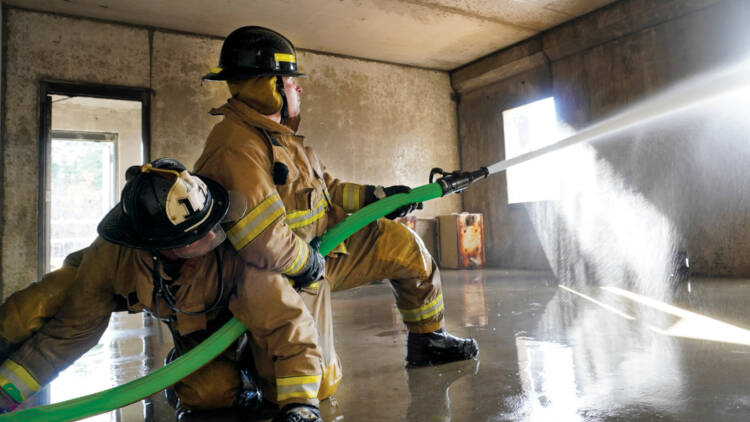
That connection is not theoretical. Firefighter Rescue Survey data shows that 24 per cent of fire victims are located by the attack team. The same crew advancing the line is often the one making the rescue, placing a premium on efficiency and reducing firefighter fatigue.
A hose that is too heavy, too rigid, or too difficult to manage doesn’t just slow the advance — it works against the firefighter.
To evaluate hose effectively beyond size and price, departments should focus on five functional performance areas.
1. Flow and friction loss
Fire hose exists to move water efficiently. Departments should ensure attack lines are properly matched to nozzle selection and intended flow range.
Friction loss directly affects pump discharge pressure. The higher the friction loss, the harder the pump must work to achieve the desired flow — particularly on long stretches, vertical operations, standpipe systems, or larger attack lines where pump limits become a factor.
Higher pressures increase apparatus strain and fireground noise, while extremely high static pressure hydrants can sometimes overcharge low-friction-loss lines.
Departments should evaluate the minimum inner diameter required to achieve their desired flow while balancing friction loss, water weight, and overall handling. Even a few extra pounds per line can increase fatigue and reduce operational efficiency during the push.
2. Kink resistance and flexibility
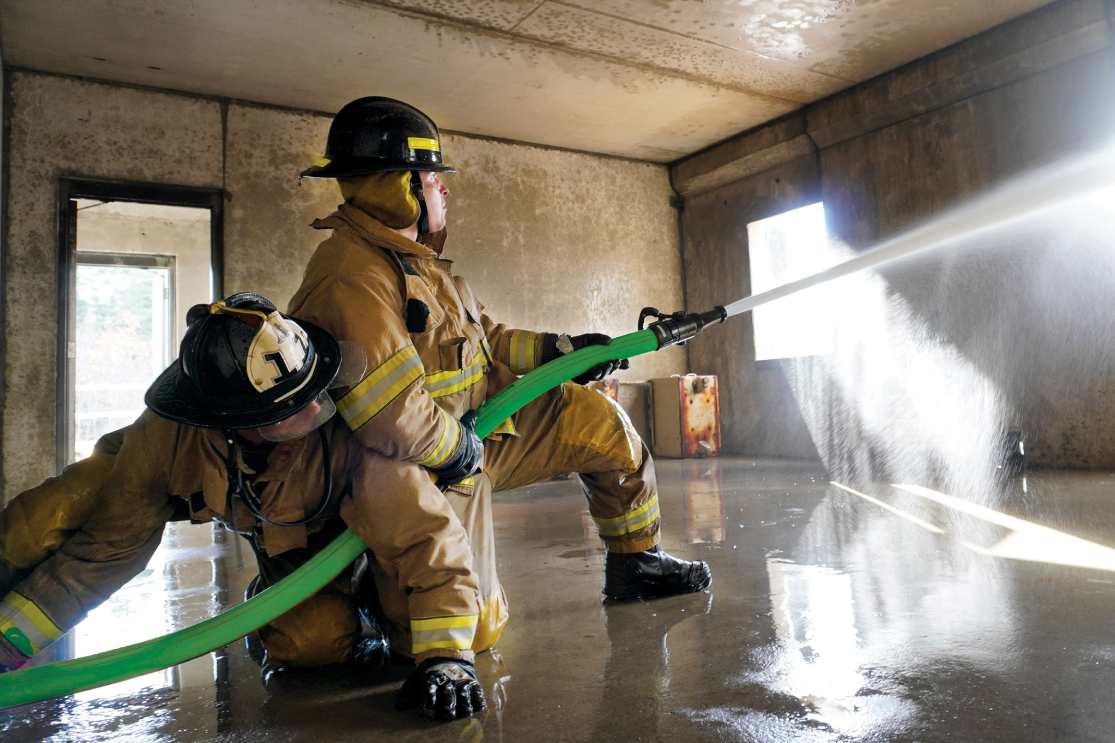
Evaluating attack hose as a package allows departments to get first-hand experience at their desired application. While not as worrisome at high pressures, kink resistance becomes critical with low-pressure nozzles as it can affect performance beyond just volume output.
But kink resistance must be balanced with flexibility and weight. A stiffer hose may resist kinks more effectively, but often adds weight and reduces handling. Greater flexibility can improve manoeuvrability but may increase susceptibility to flow-restricting bends.
Departments should evaluate hose performance during real-world advancement — under partial pressure, around corners, and in confined spaces — not just while flowing in open areas.
3. Packability
Performance starts before the line is charged.
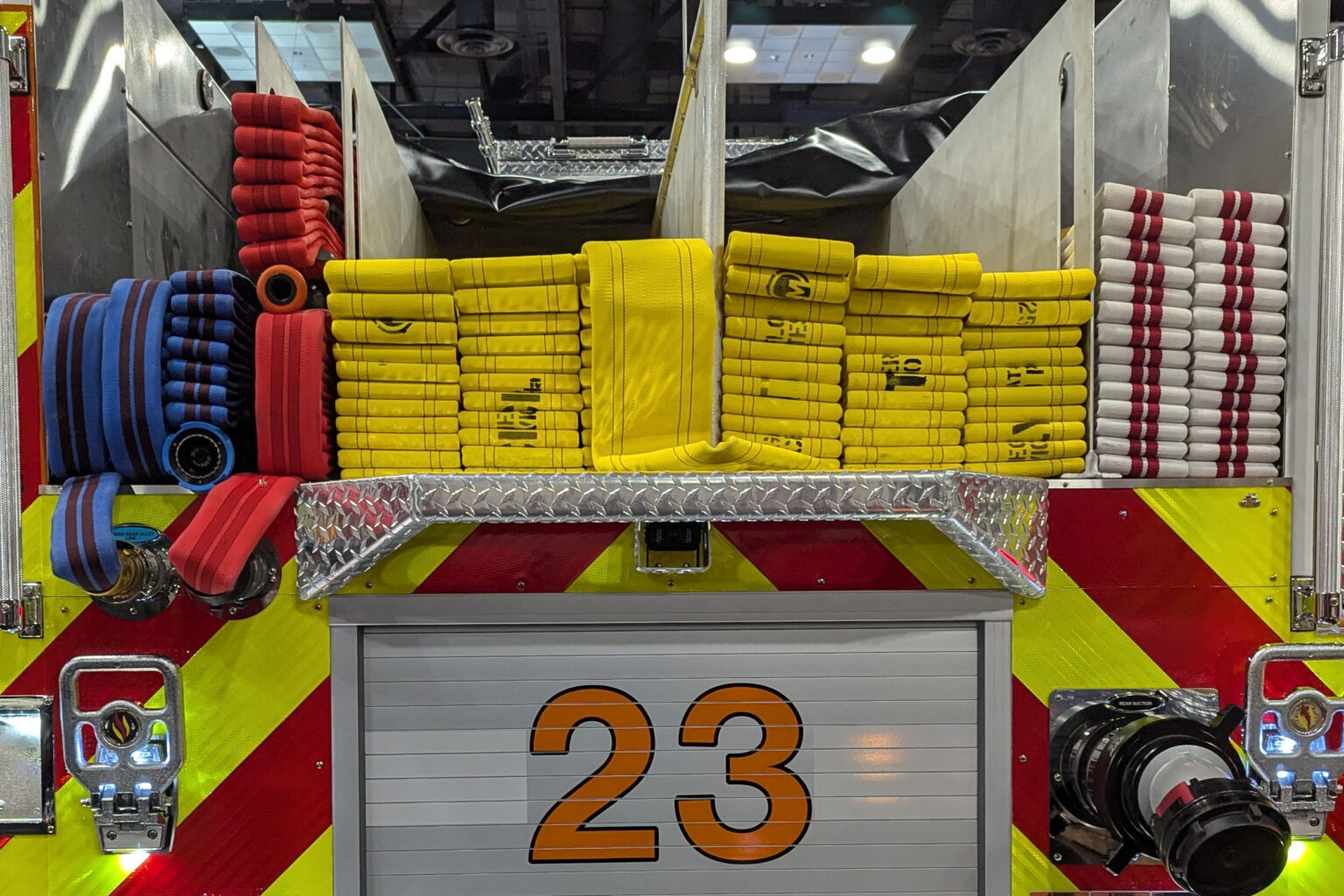
Packability affects how efficiently hose can be loaded, stored, and deployed. A hose that packs tighter and more consistently maximizes hose bed capacity and supports cleaner, more predictable loads.
This directly impacts deployment. Hose that folds tighter and drapes better on the shoulder is more likely to stay intact during the stretch — particularly on long stretches and interior attacks where deployment efficiency matters most.
4. MANEUVERABILITY
Maneuverability is about hose handling — how the line works in the hands of the firefighter.
Weight, flexibility, kink resistance, and hose diameter all influence how easily a line can be advanced, repositioned, and controlled. Finding the minimum hose diameter required to meet flow targets can also reduce drag weight and ground friction.
This is more than convenience. UL Fire Safety Research Institute studies continue to show that rapid water application improves extinguishment, reduces heat release, and supports survivability.
A hose that works for the firefighter — not against them — reduces physical strain, improves efficiency, and preserves energy for critical tasks.
Being confident in how an attack line maneuver is critical for effective fire attack, as is understanding the effects of radiant or conductive heat exposure on the performance of the line.
5. Heat resistance
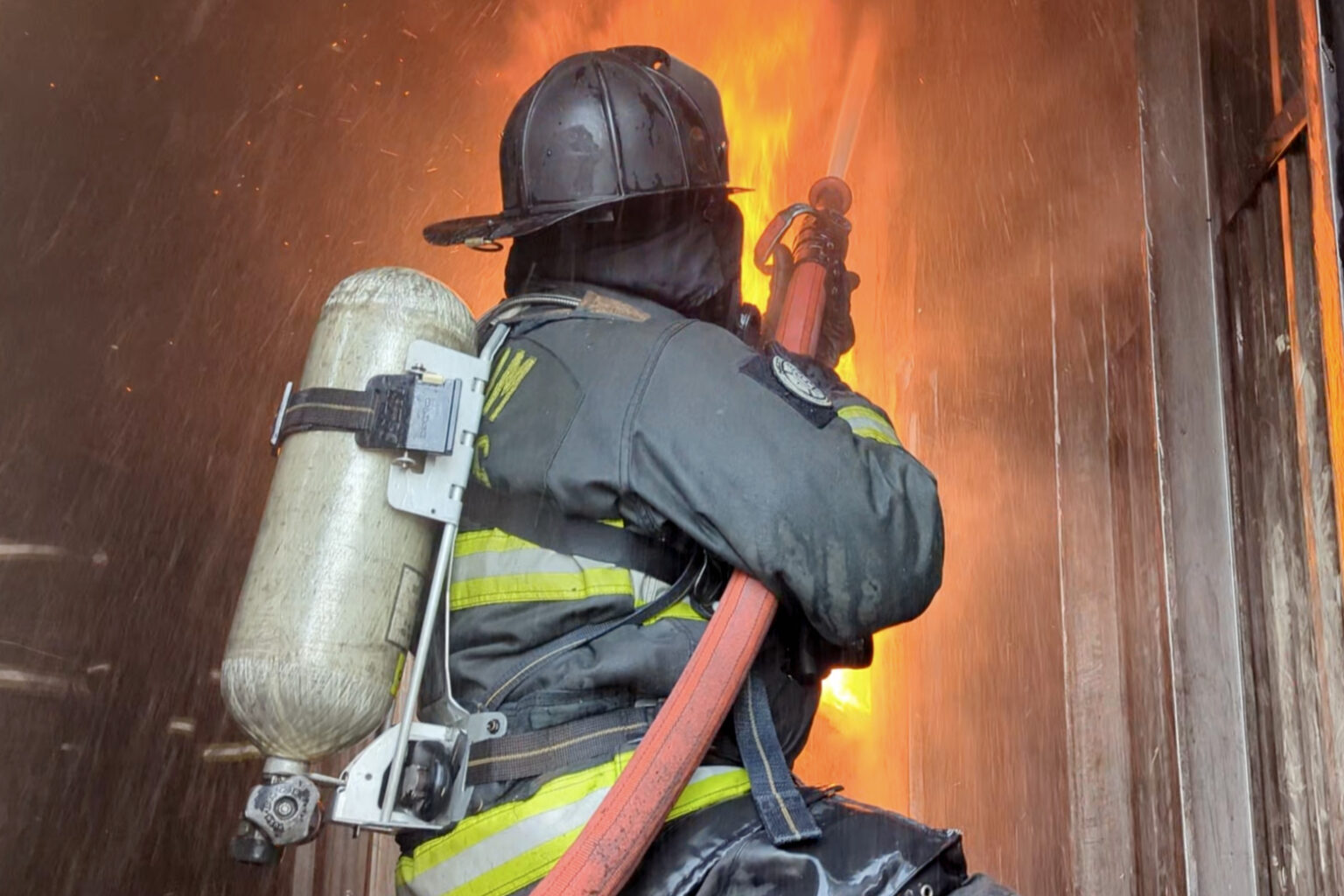
Heat exposure is unavoidable on the fireground. The question is not if a hose will be exposed — but how it performs afterward.
As of March 2021, NFPA 1960 incorporated new radiant and conductive heat testing per UL-19. These evaluations measure both burn-through resistance and performance degradation after exposure.
Departments should look beyond pass/fail ratings and focus on loss-of-flow results to better understand how hose performance changes under fireground conditions.
Balancing priorities: Finding the sweet spot
Each of these areas defines an aspect of hose performance — but they are all interconnected.
Improving one often affects another. Increasing durability can add weight. Enhancing kink resistance can reduce flexibility. Improving heat resistance can influence handling.
Departments must weigh these priorities against their operational needs — staffing levels, fireground conditions, and deployment models — to determine what matters most.
At Mercedes Textiles, that balance is engineered deliberately. Our focus is on finding the “sweet spot” — developing hose that prioritizes lightweight construction, efficient water delivery, and strong packability, while maintaining the durability firefighters rely on.
That approach has been proven on the fireground. Products like our KrakenEXO line have delivered consistent performance for more than 15 years — earning their reputation through real-world use.
Beyond the fireground
Performance is also defined by how a hose is built and verified.
At Mercedes Textiles, premium hose lines are UL/ULC listed — not just tested, but officially certified through third-party validation. Ongoing audits ensure approved materials and manufacturing processes remain consistent over time.
Mercedes Textiles also manufactures hose and couplings end-to-end in Canada using skilled union labour, maintaining full control over engineering, assembly, and quality.
Backed by our 2-10-L warranty, that commitment extends beyond initial performance and into long-term reliability.
Because you’re on the line…
Defining performance in fire hose means looking beyond the basic specs on paper. It requires understanding how a hose will perform in the hands of your crews, under the conditions they face, and across the full scope of the job. When that evaluation is done well, the result is equipment that works with firefighters — supporting efficiency, reducing fatigue, and enabling better outcomes.
At Mercedes Textiles, every hose is engineered to balance efficiency, durability, and handling to deliver that performance. Because you’re on the line, and that matters to us.
Explore hose specifications, tools, and resources at KnowYourHose.com, or connect with the Mercedes Textiles team to learn how our lines are engineered to hit the performance “sweet spot” for your department.