
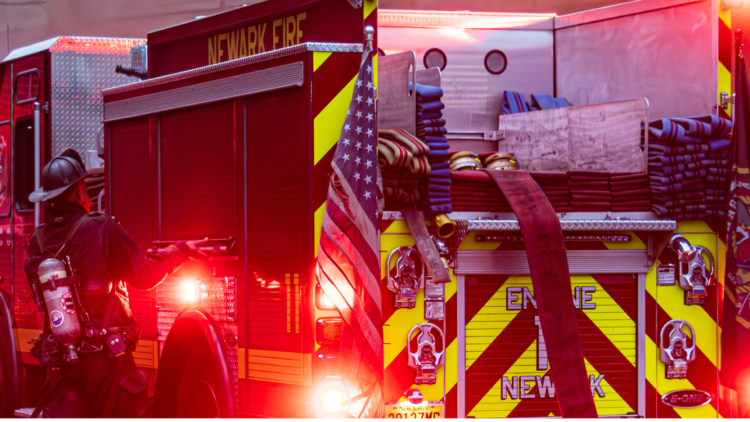
You found a hose that fits the job. Now will it fit in the bed? And will it pull cleanly?
It might seem easy to dismiss packability as a nonissue — but think of it like a screwdriver tip set. If you've ever owned one that was accessible, well-organized, and functional, you know those "niceties" make a real difference in how efficiently you work, especially when you need to move fast.
When seconds matter, packability isn't a nicety. It's a necessity.
What Is Packability in Fire Hose?
Packability describes how efficiently a hose can be loaded, stored, and deployed. A hose that packs tighter and more consistently maximizes hose bed capacity and supports cleaner, more predictable loads — which means less time wrestling hose and more time getting water on the fire.
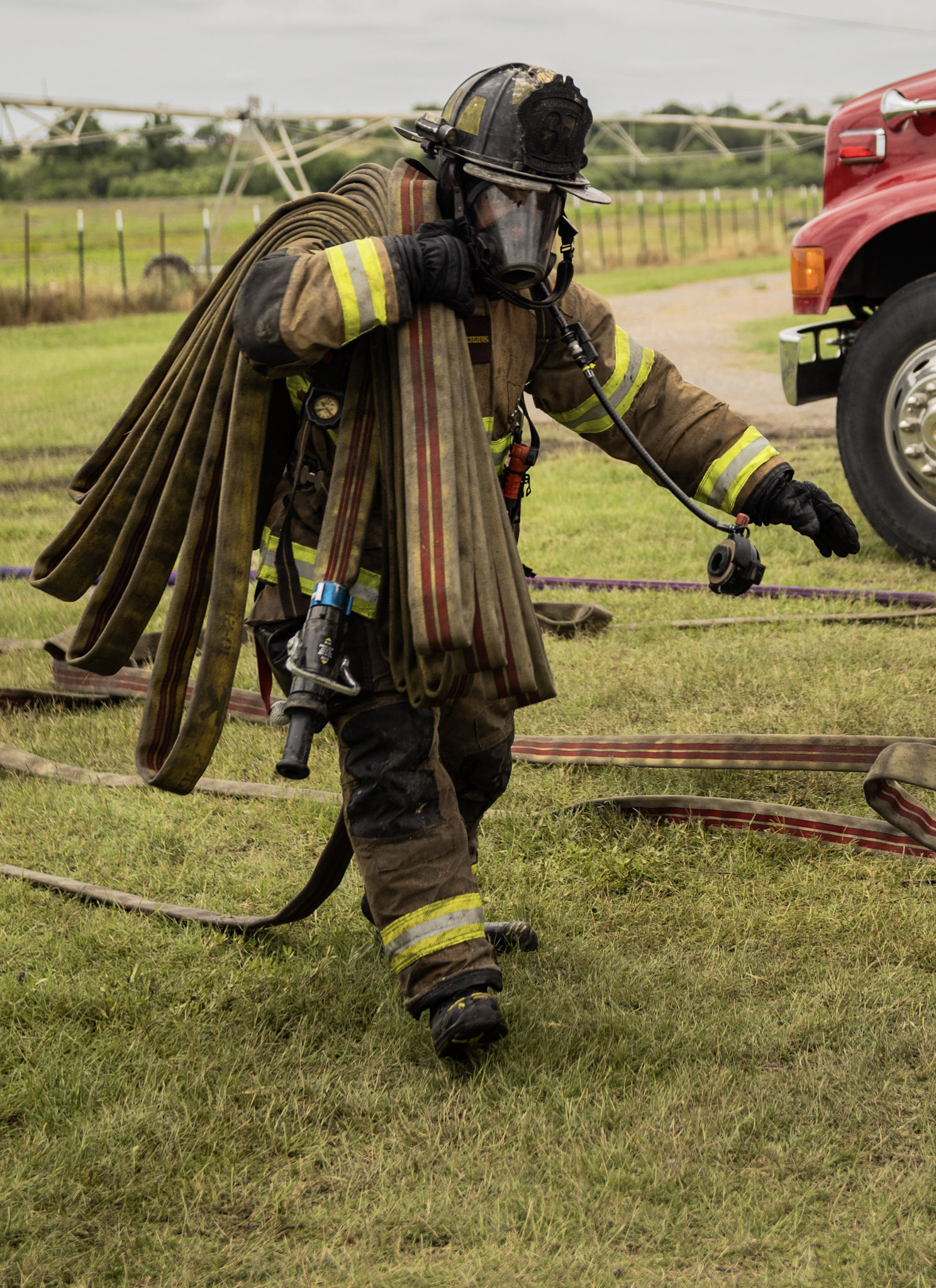
Packability also directly impacts deployment. Hose that folds tighter and drapes better on the shoulder is more likely to stay intact during the stretch, particularly on long stretches and interior attacks where every second of deployment efficiency counts.
The Specs That Define a Packable Fire Hose
When you're evaluating how a hose will pack, a few hard numbers help you verify against your own tray dimensions:
- Flat width
- Edge thickness
- 180° bend thickness
- Coupling size
These specs are a starting point. But even accurate spec sheets can't fully predict real-world capacity — hose material, flexibility, and the packing skill of your crew all affect what actually fits and how it performs once it's off the shelf and in the bed.
How Much Hose Fits Into a Hose Bed? Calculating Real-World Capacity
This is exactly the question we set out to answer when we built our Hose Bed Capacity Calculator. We verified the tool with active departments to make sure we weren't overestimating capacity based on standard or modified minuteman loads and flat packs.
It's not a guarantee — but it is a well-educated, field-informed estimate to help you plan your beds with confidence.
A few variables to weigh as you plan:
- Diameter — larger diameter means fewer folds per bed, changing your pack geometry
- Length — total footage directly limits how many sections or continuous lengths fit
- Quantity — how many lines you're carrying for a given bed
- Configuration — minuteman, flat pack, triple layer, or a hybrid load
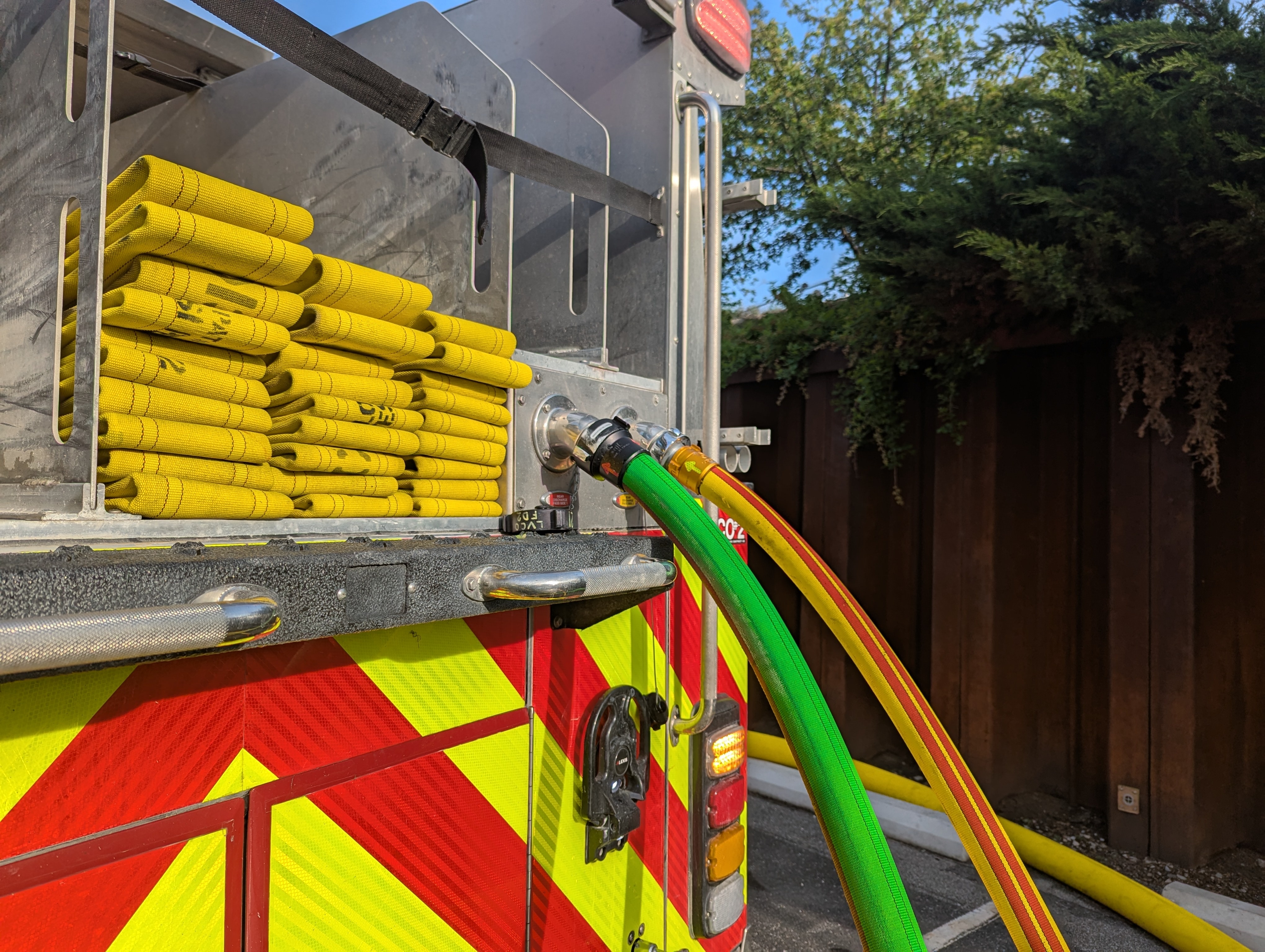
All four affect how your hose package fits — and how it deploys — on the apparatus. A line that looks right on paper can create a very different problem if it doesn't fit the tray or falls off the shoulder during deployment. That's why we always recommend physically packing candidate lines as part of any hose demo, not just reviewing the spec sheet.
Choosing Hose for Flows, Trays, and Carry
When you choose your hose, consider how it performs everywhere: from the flows it needs to deliver, to the tray it needs to fit, to the carry on a firefighter's shoulder. For packability specifically, three questions do most of the work:
- How much hose do you need for the assignment?
- Where does it go — which bed, which tray, which apparatus?
- How will it be packed and deployed on the fireground?
Planning for packability as part of your hose evaluation — not as an afterthought — sets your crew up to get water on the fire faster and more effectively.
We take pride in our lines packing pretty. But it's not vanity. It's part of why the hose performs when and how the job demands it.
Right-Size Your Supply Hose
Attack hose gets most of the attention, but supply lines take up more space in the bed — and getting the size wrong has bigger downstream consequences for water supply.
Are you being strategic about your supply hose sizing, or defaulting to what's always been on the rig?
Check out the Right Sizing Supply series by Capt. Caleb Langer, our supply specialist, for a deeper look at matching supply hose diameter and configuration to your department's actual needs. You can also find video from his Key City Fire Conference class on our social channels.
Explore the Right Sizing Supply series →
FAQ: Fire Hose Packability and Hose Bed Capacity
How much hose fits in a hose bed?
Capacity depends on hose diameter, length, quantity, and packing configuration (minuteman, flat pack, or hybrid), plus the hose's flat width, edge thickness, and 180° bend thickness relative to your tray dimensions. A capacity calculator built and verified with active departments gives a reliable field estimate, but physically packing the hose in a demo is the only way to confirm fit.
What makes a fire hose "packable"?
A packable fire hose folds tighter and more consistently, maximizing hose bed space while supporting a clean, predictable load. Packability is driven by the hose's flat width, edge and bend thickness, coupling size, and material flexibility.
Why does packability affect fireground deployment?
Hose that packs and folds tighter tends to drape better on the shoulder and stay intact during the stretch, which matters most on long stretches and interior attacks where every second of deployment time counts.
How do I right-size my supply hose?
Right-sizing supply hose means matching diameter and configuration to your department's actual water supply needs and apparatus tray space — not defaulting to whatever's traditionally been carried. Resources like the Right Sizing Supply series break down that evaluation process in more depth.
Because you’re on the line…
Defining performance in fire hose means looking beyond the specs on paper.
It requires understanding how a hose will perform in the hands of your crews, under the conditions they face — including how it loads, packs, and pulls off the rig. When that evaluation is done well, the result is equipment that works with firefighters: supporting efficiency, reducing fatigue, and enabling better outcomes on the fireground.
At Mercedes Textiles, every hose is engineered to balance efficiency, durability, and handling to deliver that performance. Because you’re on the line, and that matters to us.
Explore hose specifications, tools, and resources at KnowYourHose.com, or connect with the Mercedes Textiles team to learn how our lines are engineered to hit the performance “sweet spot” for your department.