
written by Capt. Caleb Langer
A quiet revolution is underway in the fire service, focusing on agility, efficiency, and effectiveness. This shift embraces modern adaptations of traditional approaches. From mission-focused apparatus with low hosebeds to lightweight, streamlined gear, the fireground is evolving. Nowhere is this innovation more evident than in attack packages, where modern designs deliver powerful fire flows in the lightest, most maneuverable configurations.
The Rise of the 1-½” Handline
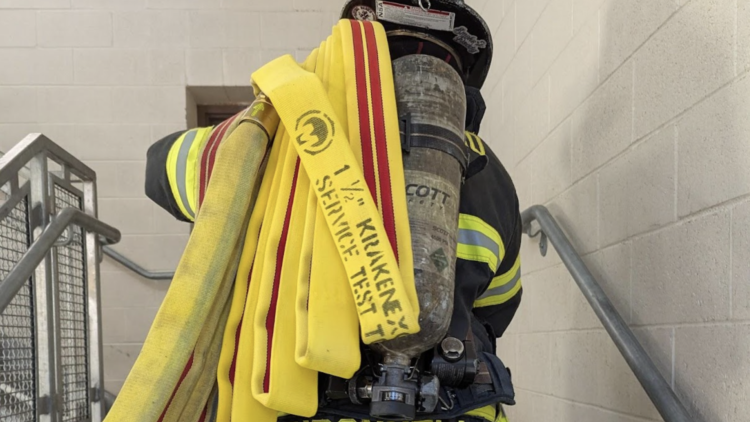
Over the past decade, many departments adopted truer-diameter 1-¾” hoses to optimize residential fire attack packages. Recently, advancements in hose and nozzle technology have reignited interest in the 1-½” handline. For example, Mercedes Textiles' KrakenEXO 1-½” hose, with a 1.65” dry interior diameter, achieves fire flows of 150–160 GPM while maintaining exceptional agility.
With 35 psi friction loss per 100 feet, it mirrors the performance of many legacy 1-¾” lines, offering the best of both worlds: low enough pump pressures to be practical but high enough to prevent kinking and ensure proper engine governor operation. For extended stretches beyond 300 feet, Mercedes KrakenEXO SUPER II hose complements the system, maintaining manageable pressures even at 600 feet while reducing overall hose weight.
Balancing Capability and Real-World Demands
Firefighters take pride in overcoming challenges, including advancing and operating larger handlines. However, modern fire behavior research, tactical insights, and victim survivability data suggest that lighter, more efficient handlines can be game-changing—especially for under-staffed departments. With two firefighters often comprising an attack team, the ability to sustain 150–160 GPM flows under real-world conditions is critical.
Firefighter Rescue Survey data shows that 24% of fire victims are located by the attack team. This underscores the importance of advancing and operating the handline effectively while preserving energy for potential rescues. A lighter, more manageable hose enables firefighters to operate efficiently without compromising their ability to perform lifesaving tasks.
Why Weight and Drag Matter
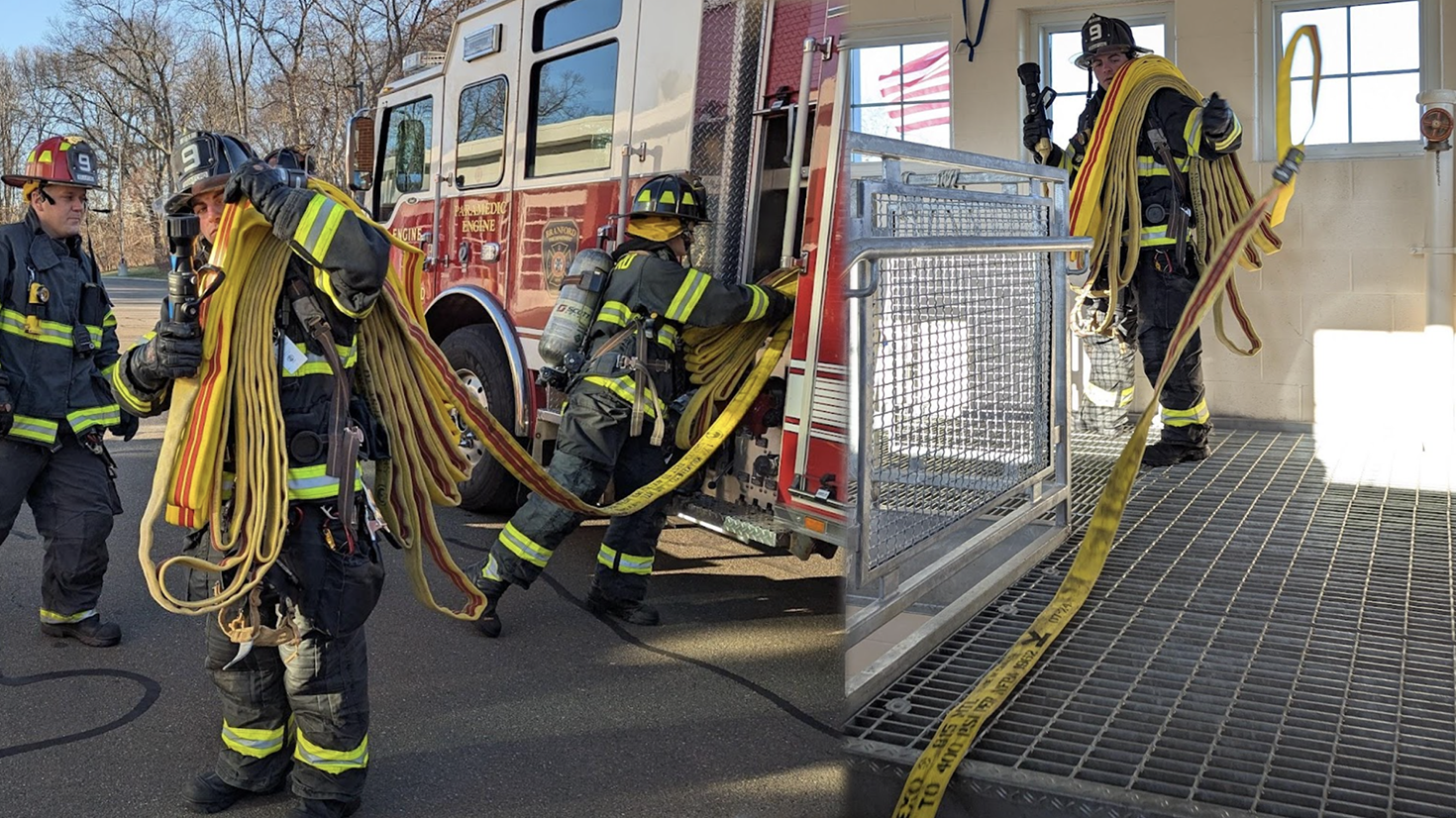
The difference between a 1-½” and 1-¾” handline is more than numbers on a spec sheet. A common 1-¾” line weighs about 80 pounds per charged length, compared to 65 pounds for the KrakenEXO 1-½”—a 15-pound reduction per length. Research in military settings demonstrates significant performance improvements with similar weight reductions, suggesting parallels for firefighters.
Additionally, the 1-½” hose has a smaller outside diameter, reducing grip size and ground contact area. This results in less drag, making it easier for nozzle and backup firefighters—especially those with smaller hands—to handle. Together, these factors create an agile attack package that excels even when staffing is limited.
The Role of Flow and Nozzle Selection
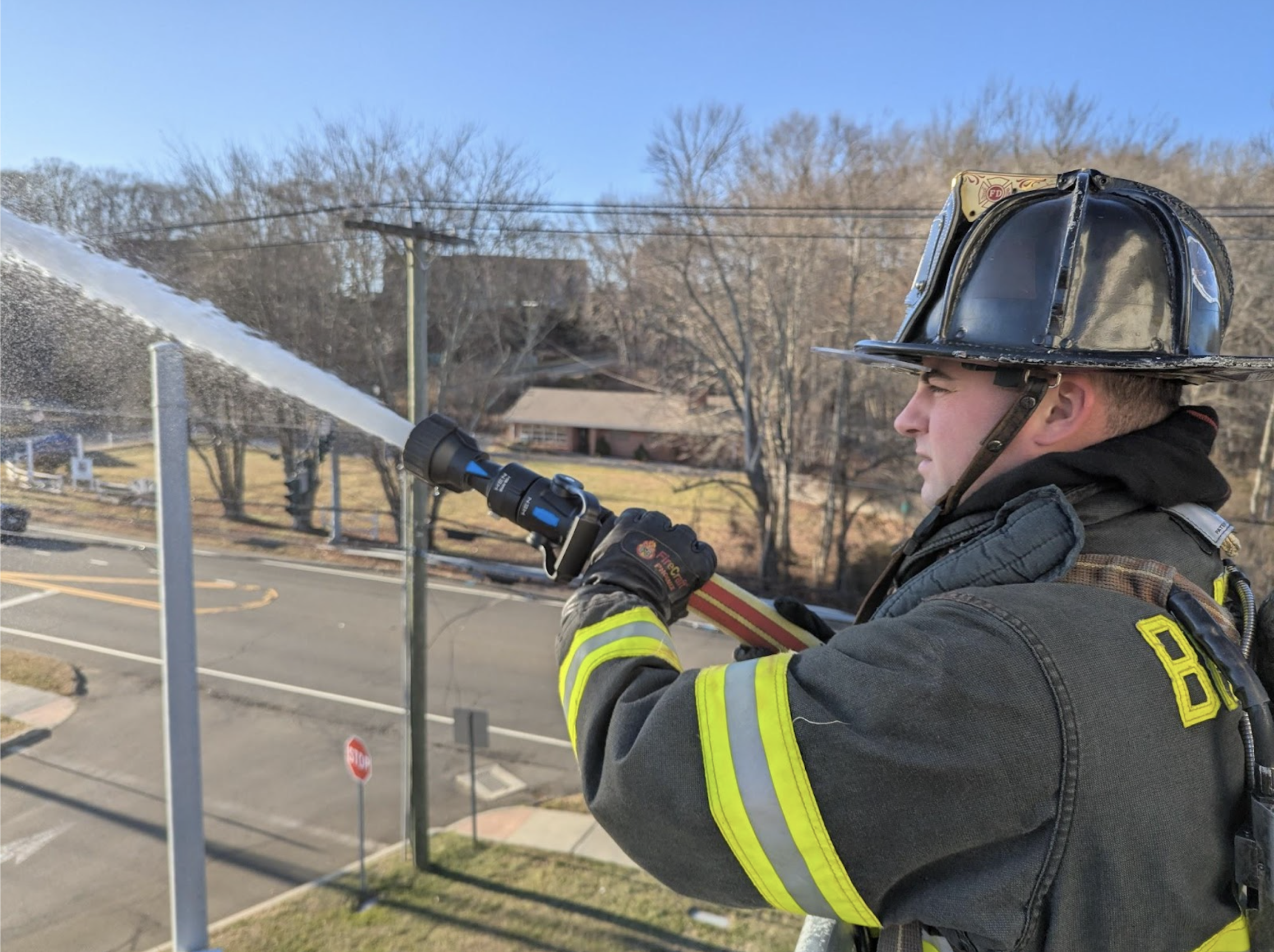
In the 1990s and 2000s, many departments adopted 15/16” solid bore tips, delivering 185 GPM. However, as staffing constraints became apparent, the ⅞” tip with its 160 GPM flow gained favor. At 50 psi, it offers a manageable 60 pounds of nozzle reaction, compared to 69 pounds for the 15/16”. This reduction allows firefighters to sustain flows longer, place water more effectively, and remain less fatigued during operations.
The KrakenEXO 1-½” hose complements this approach, delivering smooth, pliable performance ideal for tight residential spaces. For departments seeking even lower nozzle reaction, the HEN Turbo device allows flows of 153 GPM at 45 psi, reducing nozzle reaction to just 54 pounds.
Advancing the Line With New Technologies
While the original KrakenEXO 1-½” can support the necessary 150-160 gpm flows, Mercedes has gone further to develop a brand-new, patent-pending technology to further increase the nozzle handling.
Their new LPX Technology – short for Low Pressure Expansion – specifically reinforces the last few feet behind the nozzle to increase stability where it matters while maintaining the lightweight flexibility throughout the rest of the line.
Working with their distribution partner The Fire Store, Mercedes engineered this solution specifically at the request of D.C. Fire, who was looking for a lighter, more maneuverable solution that would work with their staffing & tight-spaced district. They pair it with a TFT fixed-flow 150 gpm at 75 psi smooth bore.
The new KrakenEXO LPX 1-½” opens this small diameter line up to perform even better with standard 50 psi nozzles, making it a great option for consideration for departments looking for a swift, effective attack line. Mercedes will be officially launching the LPX Technology at FDIC 2026.
A Game-Changer for the Residential Fireground
The modern 1-½” handline represents a significant step forward for departments aiming to maximize performance in residential fire scenarios. By combining high flows, reasonable pressures, and lightweight agility, it delivers industry best practices for fire attack while supporting firefighter mobility and effectiveness.
As Capt. Josh Burchick of Forged & Unbroken puts it: “To be less restricted, more mobile, have greater performance, and have the ability to do more work in less time should be a common goal for all fire service organizations.”
The return of the 1-½” handline, enabled by cutting-edge innovations, aligns perfectly with this vision, empowering departments to meet modern challenges with confidence.
About the Author:
Captain Langer joined the fire service in 1999 and has since worked for combination and career fire departments covering a range of response areas. He currently serves with the Northampton Fire Rescue Department (MA) where he holds the rank of Captain, having recently finished his tenure as the department’s training officer.
Caleb holds an A.S. in Fire Science from Greenfield Community College and is a graduate of Northeastern University’s Paramedic Program. His areas of focus in the fire service include engine company operations & water supply, fireground tactics and fire apparatus design, topics he has written on for Fire Engineering Magazine. He is rooted in a mission-oriented approach, dedicated to improving operational effectiveness.