
You can buy the hose. You can buy the nozzle. But do you know what your atTack line actually delivers?
Many tools come through the firehouse doors. Some are essential. Some are useful in the right circumstances. And some eventually end up collecting dust on a shelf, forgotten in a drawer, or buried beneath the latest piece of equipment everyone just had to have.
Our rigs are loaded with tools. Engine Rooms fill every available horizontal surface with equipment, and pockets on our gear become so overloaded that it sometimes seems we carry things simply because we have a place to put them.
The fire service has always been a mix of proven fundamentals, new technology, lessons learned on the fireground, and ideas picked up from someone else's setup at a conference. Some innovations change the way we do business. Others fade away as quickly as they arrive.
The challenge is knowing the difference between a passing trend and a tool that makes us better at our job. There is one tool that has been part of the fire service for generations, yet many firehouses still don't have one: the pitot gauge. And when we talk about getting the most out of our attack lines, it's time to reconsider whether this tool belongs on every firehouse's essential-equipment list.
THE EVOLUTION OF THE ATTACK LINE
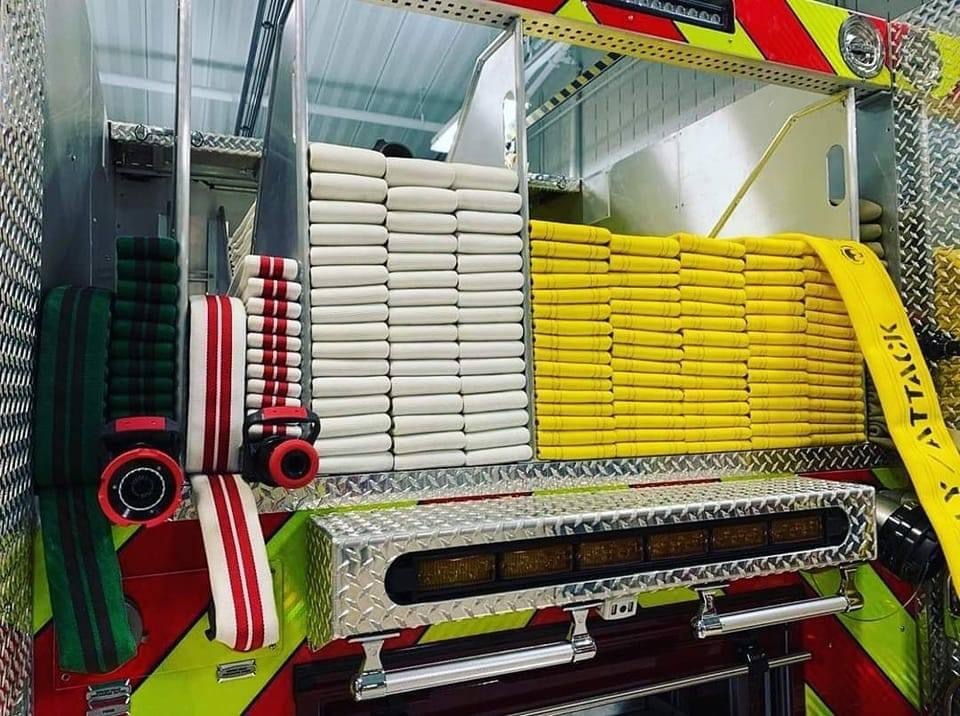
Fire attack packages have become an increasingly important part of modern fireground operations. Departments are evaluating hose diameter, hose construction, nozzle selection, operating pressure, gallons per minute (GPM), nozzle reaction, and the physical demands placed on firefighters advancing a line. High-pressure combination nozzles aren't the only option anymore. Smooth-bore nozzles, fixed-gallonage nozzles, and low-pressure nozzle configurations have gained attention as departments look for efficient, effective ways to deliver water where it matters most.
The goal is straight-forward: develop an attack package that delivers the required flow, provides manageable nozzle reaction, and allows firefighters to advance and operate the line effectively.
Modern hose construction, improved kink resistance, and thoughtful nozzle selection can all contribute to a more efficient operation. Well-trained firefighters who understand their equipment can make better decisions about line placement, advancement, and water application. But selecting the right hose and nozzle is only part of the equation.
How do you know the line is actually delivering the flow you expect? You can purchase a hose package advertised to deliver a particular GPM at a particular pressure. You can consult a nozzle manufacturer's specifications or use a pump chart developed from published information. Those resources are valuable starting points, but they don't automatically establish how your complete attack package performs under your operating conditions.
Your hose. Your nozzle. Your hose length. Your pump. Your operating conditions.
Do you know how those components work together, or are you relying on numbers developed for a different configuration? That's where flow testing comes in.
THE VALUE OF ACTUAL FLOW TESTING
Pre-incident planning should include more than selecting a nozzle and deciding how much hose to carry. Departments should verify that their attack packages perform as intended and establish operating pressures that deliver the required flow.
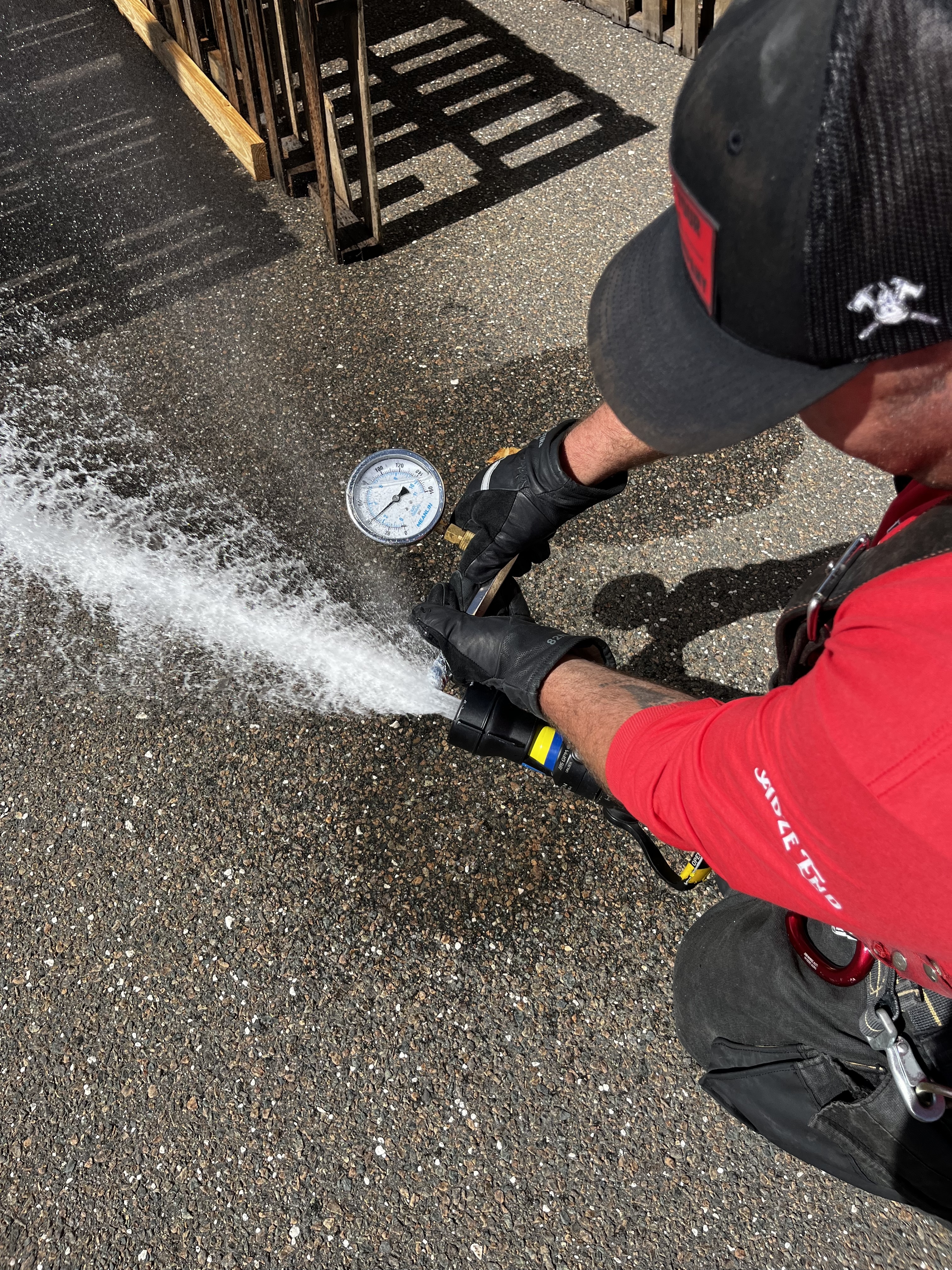
A pitot gauge is one of the tools used to accomplish that task when testing a nozzle.
A pitot gauge measures the velocity pressure of a water stream as it exits the nozzle. The reading, combined with the nozzle's effective diameter and the appropriate flow calculation, allows an operator to estimate the actual discharge flow in gallons per minute.
This gives departments a practical way to evaluate their attack packages and develop pump discharge pressures based on measured performance (actual) rather than assumptions (theoretical) alone. The distinction matters.
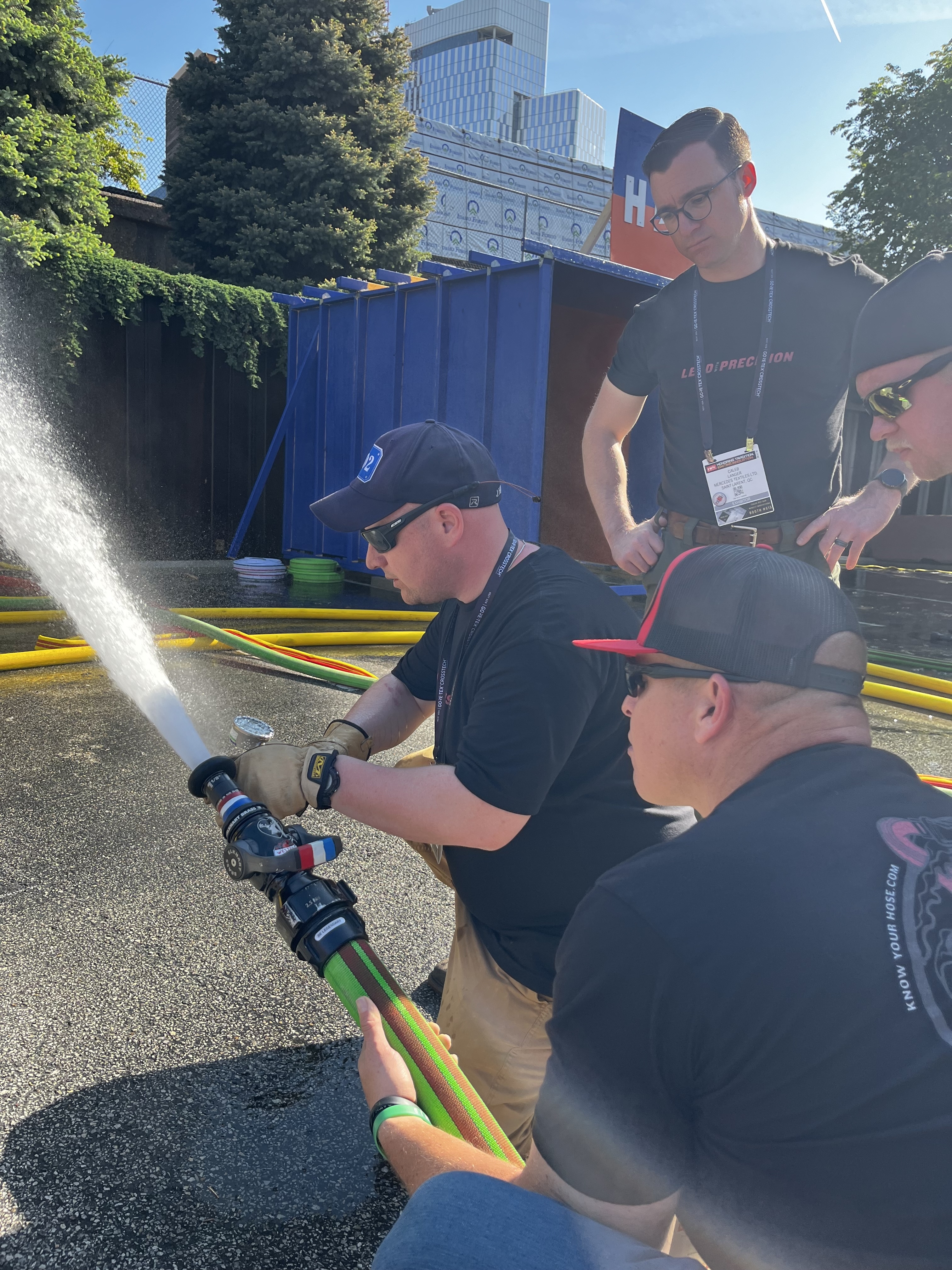
A published specification tells you what a nozzle is designed to do under specified conditions. A properly conducted flow test helps you determine how your own configuration actually performs. That information can be used to establish a pump chart that gives Engineers a reliable starting point for selecting the appropriate discharge pressure for a particular line. The objective isn't simply to produce a number. It's to establish a repeatable, documented process that helps the department deliver the intended water flow when it matters most.
UNDERSTANDING TIP PRESSURE
In nozzle operations, the pressure at the nozzle tip is an important part of the relationship between nozzle diameter, flow, and nozzle reaction.
A pitot gauge uses a small opening at the end of a probe positioned in the water stream. When properly placed in the center of a coherent, solid stream, it measures the stream's velocity pressure.
This is commonly referred to as pitot pressure. It can be used to determine flow through a smooth-bore tip when the appropriate formula and effective tip diameter are known.
It is important to understand what that measurement represents. Pitot pressure is not the same as a static pressure reading taken from a hose coupling, pump discharge, or pressure tap. Nor is it a direct measurement of pressure inside the nozzle body.
For departments using smooth-bore attack packages, this distinction is essential to understanding the relationship between nozzle performance and pump discharge pressure.
A pitot gauge is not a universal tool for measuring flow from every nozzle. Its standard application is a coherent, solid-bore stream. Fog and other broken or non-solid streams require appropriate testing methods and equipment. A pitot gauge is just one piece of the puzzle, but there are ways that we can see what the tip pressure is with the use of other tools in our cache.
PRESSURE REQUIREMENTS ARE NOT ONE-SIZE-FITS-ALL
A nozzle's required operating pressure depends on its design and intended application. Some attack packages are designed around lower tip pressures, while other nozzles and configurations require higher pressures to achieve their intended performance.
The correct target must come from the nozzle manufacturer's specifications and the department's approved operating procedures—not from a pressure number that happens to be popular.
The same principle applies to pump discharge pressure. Tip pressure is only one part of the equation. Hose diameter, hose length, friction loss, elevation, appliances, and other system characteristics influence the pressure needed at the pump to achieve the desired nozzle performance.
A properly conducted flow test helps departments understand those relationships and build pump charts that reflect their actual equipment configuration.
A PUMP CHART IS A STARTING POINT, NOT A BIBLE
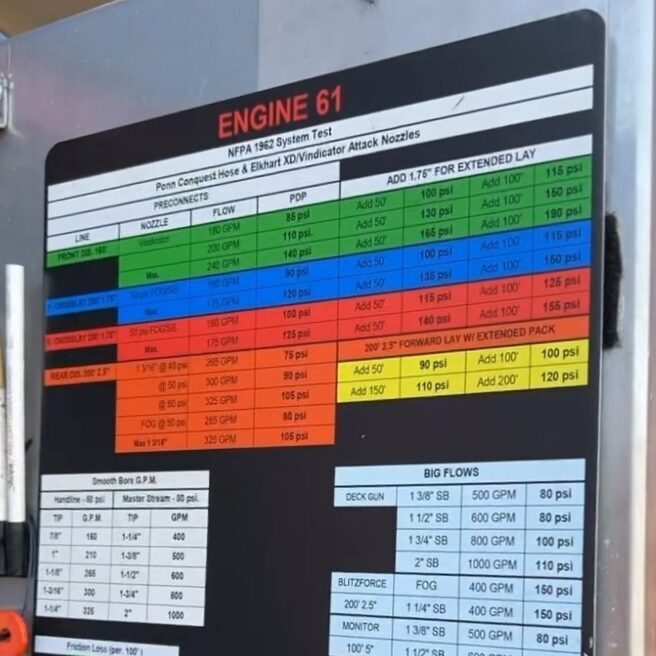
Every engineer should have a pump chart that is accurate, practical, and easy to use under pressure.
A good pump chart reduces mental arithmetic and helps the operator quickly identify an appropriate starting discharge pressure for the selected hose-and-nozzle configuration. It should be based on sound calculations, verified testing where appropriate, and the department's established procedures.
But a pump chart is not a substitute for training, judgment, or sound incident command.
Fireground conditions change. Hose layouts may differ from the planned configuration. Lines may be extended, additional appliances may be introduced, and elevation changes may affect system performance. Engineers must understand when conditions warrant an adjustment and communicate with the nozzle team to ensure the line is operating as intended.
That flexibility is precisely why knowing your equipment matters.
A chart developed from a different hose length or nozzle configuration may not accurately reflect the setup being used at an incident. A chart based solely on theoretical assumptions may overlook differences between expected and measured performance.
Test your attack packages. Document the results. Develop practical charts. Train your Engineers to understand the numbers and recognize when operating conditions require a change.
A small investment in testing equipment and training can provide valuable information that supports more consistent fireground operations.
THE DIFFERENCE BETWEEN THINKING AND KNOWING WHAT YOUR ATTACK LINES DELIVER
Here is the question every department should ask: Do you KNOW what your attack lines deliver, or do you THINK you know?
There is a difference between theoretical flow and measured flow. There is a difference between a manufacturer's published performance and the performance of your complete system. And there is a difference between an Engineer selecting a pressure from an unverified chart and one working from a chart developed through a disciplined testing process.
A pitot gauge is not a magic solution, and owning one doesn't automatically make a department proficient. The gauge must be used correctly, readings must be interpreted properly, and results must be incorporated into training and operating procedures.
But without the right testing equipment, departments may be missing an opportunity to validate their assumptions and improve their understanding of their own attack packages.
The firehouse is where that work belongs.
Flow testing can be incorporated into scheduled training, equipment evaluations, and the development of department-specific pump charts. It gives Engineers and Nozzle Firefighters a common understanding of what their equipment is designed to deliver and how to recognize when performance isn't meettng expectations.
That knowledge builds confidence—not because firefighters are told the equipment works, but because they've taken the time to verify how it performs.
The fireground is not the place to discover that your assumptions about an attack line were wrong. It's not the place to compensate for an unverified setup by randomly changing pump pressures. And it isn't the place to avoid delivering the required flow simply because nozzle reaction makes the line more difficult to manage.
The answer is preparation.
Select the appropriate attack package. Train with it. Verify its performance. Establish the correct operating pressures. Make sure your engineers understand the pump chart and your nozzle teams understand what the line is intended to deliver.
Effective fireground operations require balancing water delivery, nozzle reaction, maneuverability, and the ability to apply water effectively. The objective is not simply to flow the highest possible GPM. It is to deliver the appropriate flow for the task, using equipment that has been tested and personnel who are trained to operate it.
When departments invest the time to understand their equipment before an incident, they give their firefighters a better foundation for making decisions when conditions become difficult.
And when your attack package performs as intended, your nozzle team benefits from that preparation.
MAKE THE PITOT GAUGE AN ESSENTIAL TOOL
The fire service will always have new tools, new techniques, and new ideas competing for space on our apparatus and in our firehouses. Some will become indispensable. Others will eventually be forgotten.
A pitot gauge has stood the test of time because it serves a practical purpose: it helps firefighters evaluate nozzle performance and establish flow information that supports better pump operations.
It doesn't replace experience. It doesn't replace training. And it certainly doesn't replace sound judgment.
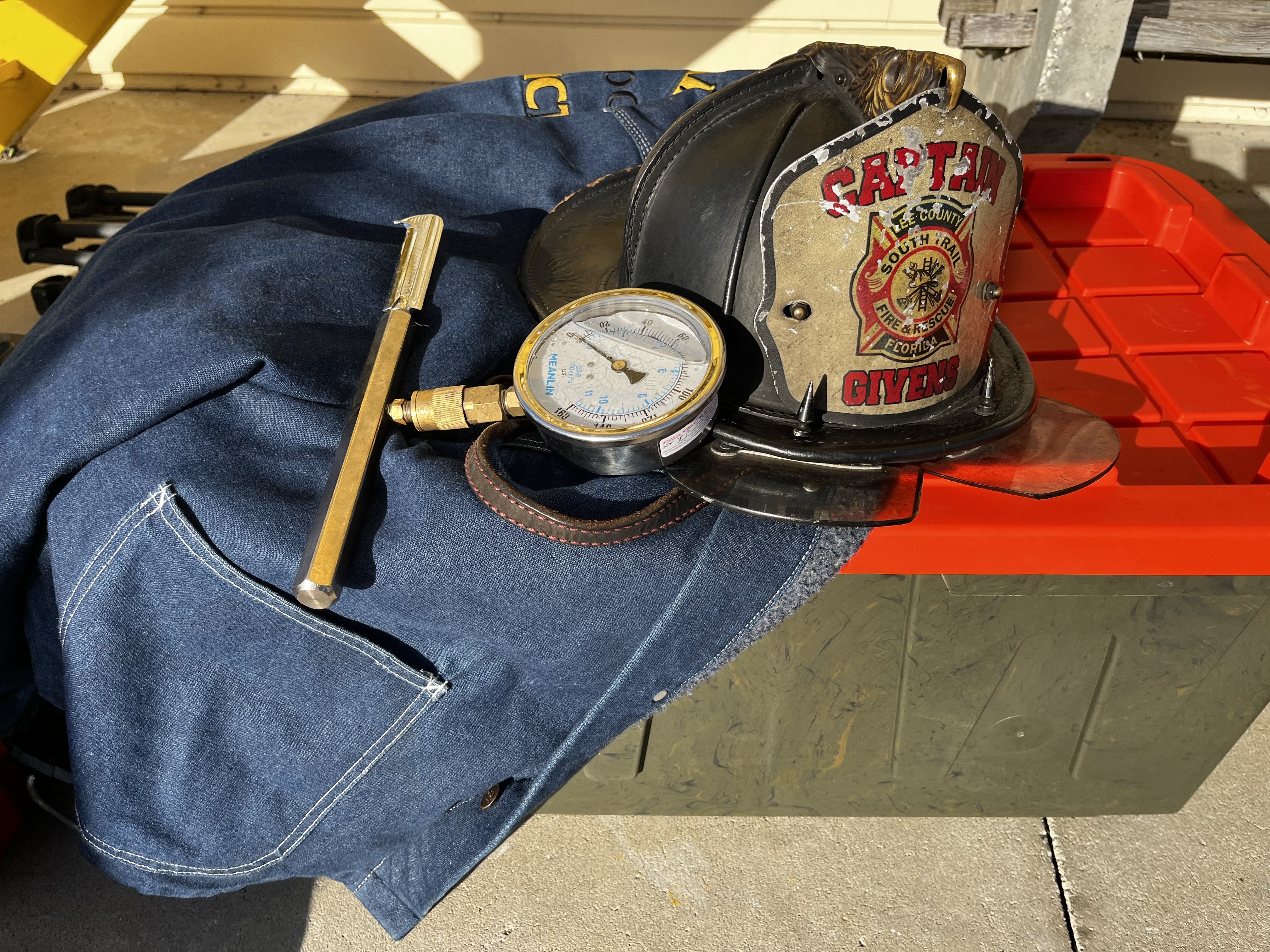
It helps turn assumptions into information. Every firehouse should have access to a pitot gauge, personnel trained to use it, and a process for testing attack packages and documenting the results. The cost of the tool is only one part of the investment; the real value comes from using that information to improve operational readiness.
Don't wait until your next working fire to question whether your attack line is performing the way you think it is.
Know your hose. Test your lines. Verify your flow. Get your pressures right before the next call.
Because when it comes to delivering water on the fireground, knowing is always better than guessing.
About the Author:
Ron Givens is a 25-year veteran of the fire service with extensive Engine Company Operations experience. A native of the Bayshore area at the Jersey Shore, he now lives happily in Southwest Florida with his wife and two children. He currently serves as a Captain in one of Lee County's busiest firehouses and has been assigned to Station 61 for nearly 15 years. He is active in the national instructor circuit and serves as a training coordinator with his current department. A fifth-generation fireman, he helped form an aggressive training culture within his area.
He has taught at numerous conferences around the country with the training group Shut Up And Train, and has assisted other training cadres such as Dagum Fire Training, Bearers of the Oath, Build Your Culture, TIC Tips, The Grab Factory, and the Mercedes Hose Team. He has also worked in Officer Development Programs and owns his own training and consulting business, 239 Fire Training & Consulting.
He hand-built a customizable pump chart program and travels the country helping firehouses establish solid pumping programs that create efficiency, versatility, and standardization among pump operators within the same organization. He is available anytime to discuss fire service topics and is willing to do whatever it takes to improve the skills of firefighters and elevate the fire service as the best blue-collar trade in the world.
Frequently Asked Questions About Pitot Gauges and Fire Hose Flow Testing
1. What is a pitot gauge used for in firefighting?
A pitot gauge is a tool firefighters use to measure the velocity pressure of water flowing from a nozzle, typically a smooth-bore nozzle producing a solid stream. That reading, combined with the nozzle's effective tip diameter and the appropriate formula, allows firefighters to calculate the approximate water flow in gallons per minute (GPM). It's an important tool for verifying nozzle performance and understanding what an attack line actually delivers.
2. Why should every fire department have a pitot gauge?
Every fire department should have access to a pitot gauge because knowing your actual water flow is more reliable than relying on assumptions. A pitot gauge allows departments to evaluate smooth-bore nozzle performance, verify attack line configurations, and develop more accurate pump charts based on measured results. Testing equipment before an incident helps firefighters understand how their hose, nozzle, and pump work together.
3. How do you measure GPM with a pitot gauge?
To calculate GPM using a pitot gauge, firefighters measure the velocity pressure of a coherent, solid stream exiting a smooth-bore nozzle. The reading is then used with the nozzle's effective diameter and the appropriate flow formula to estimate discharge flow. Accurate results depend on proper gauge placement, the correct calculation, and consistent testing procedures.
4. What is the difference between pitot pressure and nozzle pressure?
Pitot pressure measures the velocity pressure of water as it exits a nozzle, while nozzle pressure generally refers to the operating pressure at the nozzle. These measurements are related but are not interchangeable in every application. Understanding the difference is important when evaluating smooth-bore nozzle performance, calculating flow, and establishing pump discharge pressures.
5. Can a pitot gauge be used on any fire hose nozzle?
No. A standard pitot gauge is designed to measure velocity pressure in a coherent, solid water stream, making it particularly useful for smooth-bore nozzles. Fog nozzles and other nozzles producing broken or non-solid streams require different flow-testing methods and equipment. Fire departments should select testing tools appropriate for their specific nozzle configurations.
6. Why is fire hose flow testing important?
Fire hose flow testing helps departments verify that their attack lines deliver the intended gallons per minute under actual operating conditions. Hose diameter, hose length, friction loss, nozzle selection, and pump pressure all influence performance. Testing the complete attack package allows departments to identify differences between theoretical flow and measured flow before those differences become a problem on the fireground.
7. How does a pitot gauge help firefighters develop accurate pump charts?
A pitot gauge provides measured flow information that departments can use when evaluating smooth-bore attack packages and establishing pump discharge pressures. By testing their actual hose lengths, nozzle configurations, and operating conditions, departments can develop pump charts that better reflect their equipment. These charts provide engineers with a reliable starting point, but they should always be supported by training and operational judgment.
8. How often should fire departments test their attack line flow?
Fire departments should incorporate attack line flow testing into regular training, equipment evaluations, and pump chart development. Testing is also valuable when departments change hose types, nozzle configurations, hose lengths, or other components that affect water delivery. The objective is to establish a consistent, documented process that verifies performance and helps crews understand their equipment before the next call.