
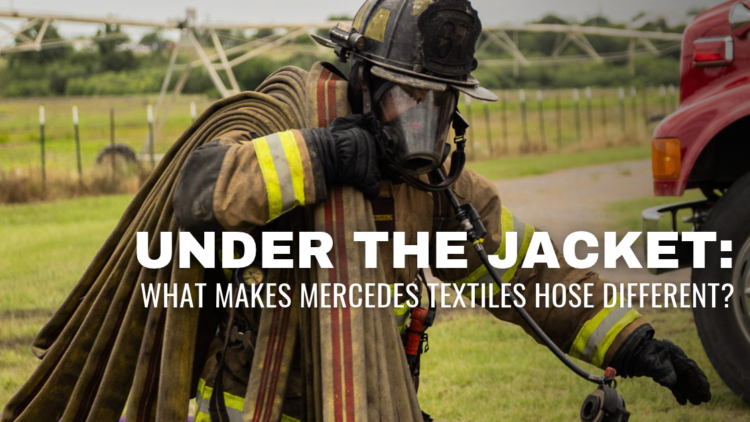
NOT ALL FIRE HOSE IS BUILT THE SAME.
While two hoses may look similar on the outside, their construction, materials, lining, couplings, and manufacturing processes can make a significant difference in how they perform on the fireground.
At Mercedes Textiles, we've spent nearly 50 years developing and manufacturing fire hose with one goal: delivering high-performing, dependable attack and supply lines that meet the demands of the fire service.
From our exclusive Mertex® lining and double-jacket construction to our patented couplings and Breather Technology™, every component has a purpose.
So, what actually makes MTL fire hose different? Let's take a look under the jacket:
1. Double-Jacket Fire Hose Built for Performance
Fire hose needs to do more than move water. It needs to be durable, manageable, and capable of performing under demanding conditions.
At Mercedes Textiles, we build premium fire hose that delivers on the demands of the job. Our focus is on getting the right balance of performance and practicality, including five key characteristics:
Low weight: Helping crews manage, advance, and recover hose.
Packability: Supporting efficient hose bed storage and deployment.
Durability: Withstanding the demands of repeated fireground use.
Handling: Giving firefighters a line they can maneuver and control.
Flow performance: Delivering the water needed for the application.
Our hose construction is designed to bring these characteristics together without treating any one specification as the only measure of performance.
For departments operating at lower pressures, Mercedes Textiles's EXO lineup incorporates technologies developed specifically to address challenges associated with low-pressure hose handling, flow, and kinking.
Why it matters: The right hose package should balance performance with the practical demands of the firefighters using it.
2. Mertex® Lining: A Better Flow Starts Inside
The jacket gets most of the attention, but the lining is where the water actually moves. And when it comes to fire hose performance, the internal waterway matters.
What is Mertex lining?
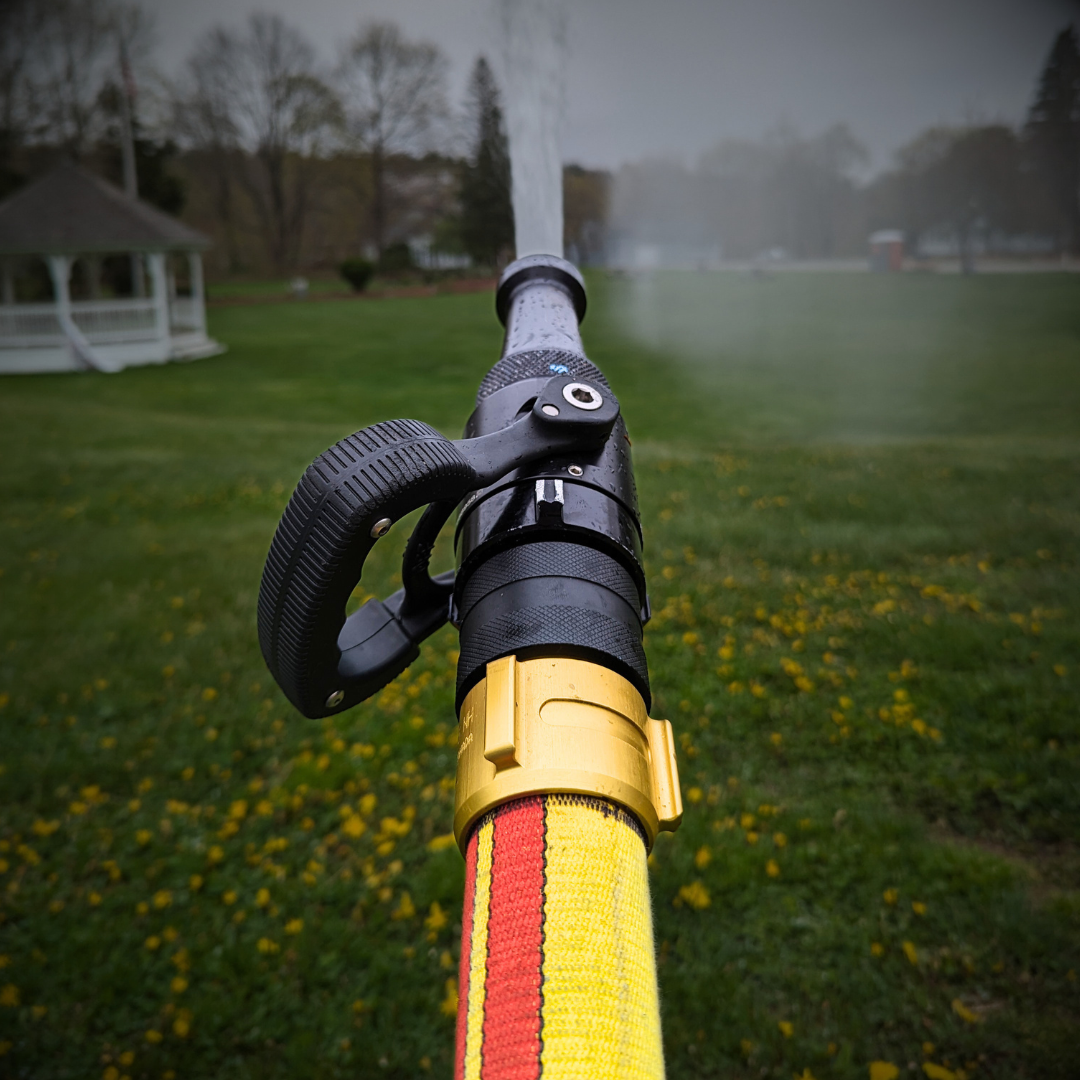
Mertex® is MTL's exclusive fire hose lining technology. Unlike traditional EPDM rubber or nitrile hose construction, the Mertex manufacturing process extrudes molten lining material directly onto the fabric jacket during the construction process.
This creates an integrated lining without the use of adhesives, glues, or other bonding agents.
The result is an ultra-smooth waterway designed to minimize friction loss and support greater water flow.
Why does Mertex lining matter?
The construction of a fire hose lining can affect friction loss, flow performance, and long-term durability.
Mertex offers several important advantages to crews:
Reduced friction loss: Its smooth internal waterway helps minimize resistance as water travels through the hose.
Improved flow: Less friction loss can help support greater water delivery under comparable operating conditions.
No delamination: Because the lining is applied directly to the jacket without adhesives, Mertex eliminates the risk of adhesive-bond delamination.
Integrated construction: The lining and jacket are manufactured together as part of the manufacturing and production processes.
When you're evaluating hose, the inside deserves just as much attention as the outside.
Why it matters: The way your hose is built on the inside matters. A smooth, well-designed waterway helps reduce friction loss, improve flow, and support long-term durability.
3. In-House Coupling Manufacturing: More Control, More Customization
The hose itself is only part of the system. The connections at either end matter, too.
Couplings are handled every time a hose is connected, disconnected, loaded, deployed, or returned to service. Their design can affect how firefighters work with their hose package. That's why MTL takes a different approach to coupling manufacturing.
We manufacture our own fire hose couplings.
From engineering and jacket weaving to coupling manufacturing, assembly, and testing, we control the entire fire hose production process in-house in our North American facilities.
That gives us greater control over quality, design, and production. It also creates opportunities for more coupling customization to meet department-specific requirements.
For example, we designed the exclusive Mertex Merlite 2x2.5” as a lightweight 2.5” coupling that offers significantly greater water flow on a 2” line. This design saves about 1½ lbs compared to competitors – which is important when it comes to high rise ops! We even added a protective shoulder to prevent premature wear and deployment snags. The details matter.
From WAYOUT® to iREFLECT STORZ® – The Details Make The Difference
Because we make our couplings in-house, we're not limited to standard options from outside suppliers. That gives us more flexibility to work with departments and customize couplings to fit their specific needs.
We’ve taken that to heart by innovating unique details into our couplings to help serve the
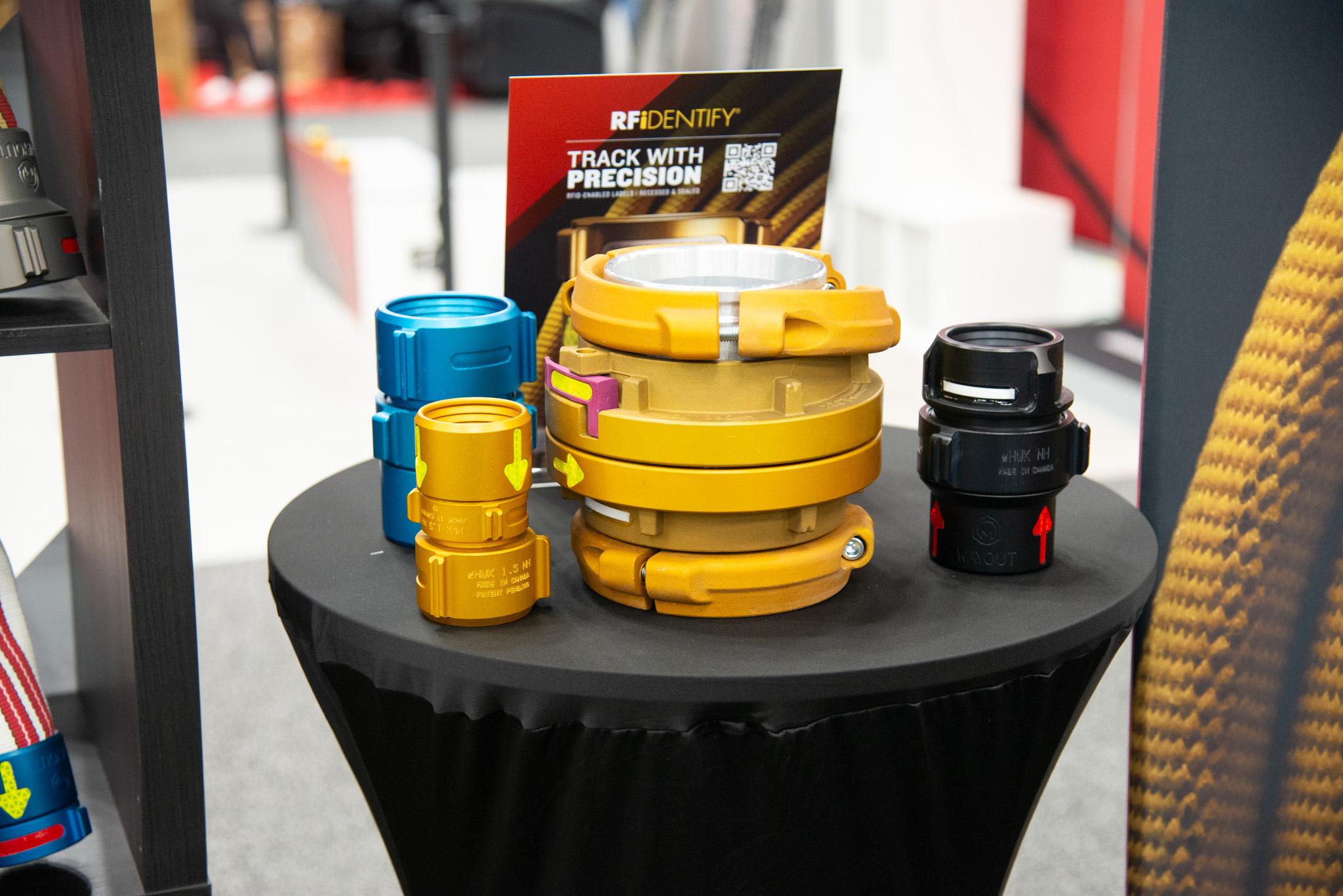
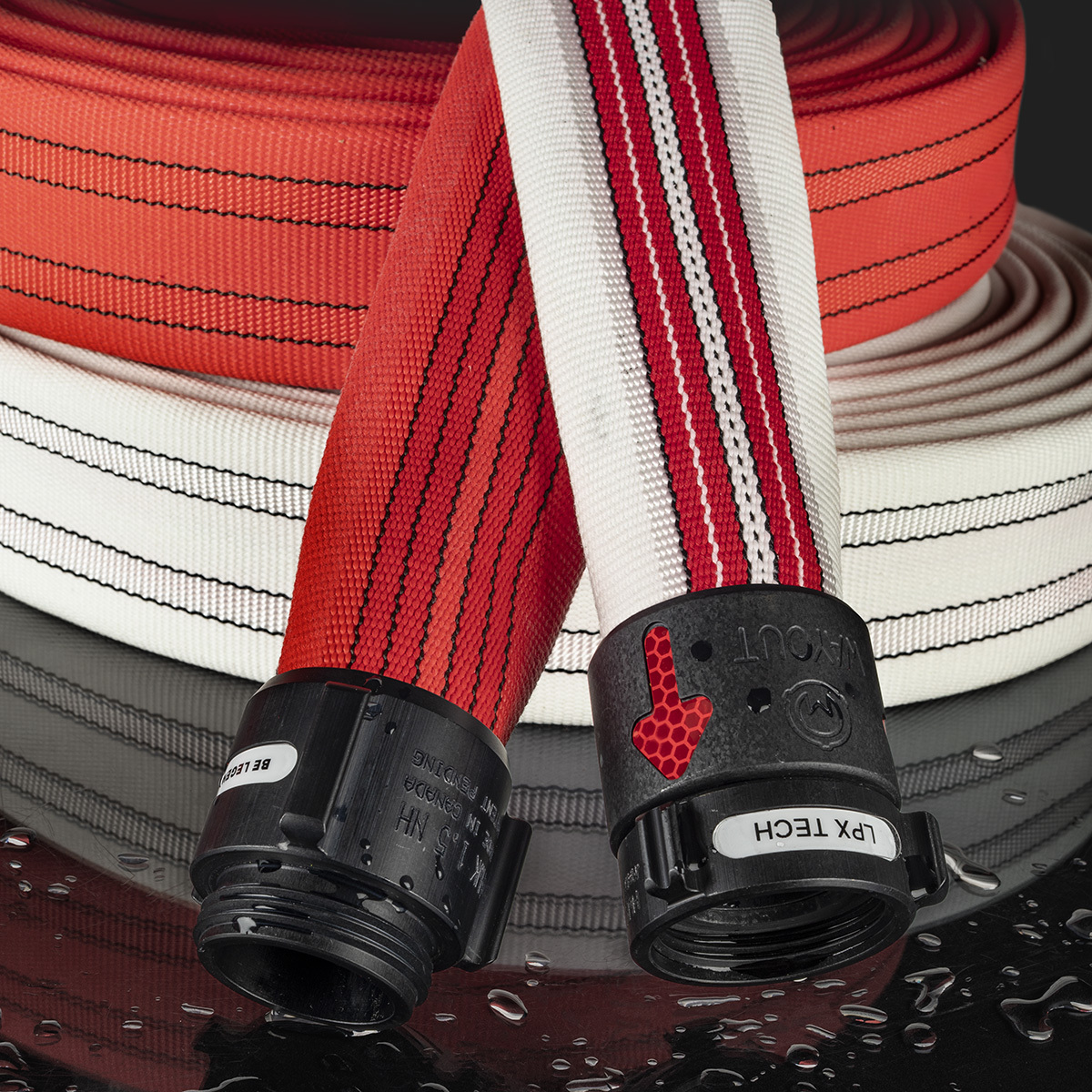
WAYOUT®: Designed with recessed, reflective directional arrows that help firefighters identify the direction of the hose connection and added egress safety.
iREFLECT STORZ®: MTL's patented Storz coupling technology incorporating reflective features and locking components.
iDENTIFY®: Our unique recessed slots designed to receive and protect identification markings and decals from wear-and-tear.
These innovations reflect our approach to hose design: focus on the things that make a difference for firefighters on the job.
RFiDENTIFY™: Adding Hose Identification Technology
Mercedes Textiles also recently launched RFiDENTIFY™, an RFID-enabled identification solution that helps departments bring digital tracking into their fire hose management process.
When used with compatible tracking systems, RFID technology can support hose identification, inventory management, and maintenance recordkeeping.
Why it matters: Manufacturing couplings in-house gives MTL greater control over the complete hose assembly while allowing more flexibility to meet department needs.
4. Innovation Designed Around Real Fireground Challenges
Innovation should solve a problem. At Mercedes Textiles, that philosophy has led to more than 60 patents covering fire hose construction, materials, couplings, identification, and performance technologies – some that we’ve highlighted above. But beyond our couplings, we also advance the line itself with technologies and designs that enhance performance.
Breather Technology™: Why Fire Hose Needs to Breathe
Fire hose is constructed using multiple layers of material. Depending on the construction, air and moisture can become trapped between those layers. That trapped air and water impacts the packability and flexibility. Just ask anyone who has tried to pack rubber LDH hose...
So we developed our own patented Breather Technology™ stripes to help release trapped air and water from within the hose construction – particularly in our MegaFlo supply lines. This technology contributes to our approach to balancing:
Hose flexibility
Strength and durability
Packability
Long-term hose performance
These details matter because fire hose goes through repeated cycles of deployment, charging, draining, recovery, and storage. A hose that performs well during operation also needs to remain manageable when crews are getting it ready for the next call.
KRAKENEXO SUPER II: MAXIMUM FLOW; MINIMUM WEIGHT
With bigger, hotter, faster fires taking over the modern fireground, the 2.5" line has become a necessity in the fire service. But it comes with challenges. Many brands are quite heavy and bulking, making maneuverability and packability an issue even before adding water weight. These same lines often swell to over 2.75" when charged. All that added water weight slows down the attack and risks lives.
Departments came to us asking for a solution. They were trying to overpump their 2" hoses to hit the flows, but finding the friction loss to high. We took that challenge. Our engineers determined the minimum charged inner diameter required to facilitate a desired flow around 265GPM without adding unnecessary weight. Combined with our ultra-smooth Mertex lining and specialty Merlite 2x2.5" couplings to offset friction loss, we created a solution.
We engineered our KrakenEXO SUPER II to offer maximum manueverability and flow at minimum weight. Engineered to flow the same 265 GPM as 2.5", it saves up to 30% in water weight – that is up to 40lbs over 50' or 160lbs over a 200' attack package. That is Innovation Delivered.
LPX Technology and Low-Pressure Hose Performance
LPX (Low Pressure eXpansion) Technology is a great example of how we develop solutions to real challenges firefighters face on the job.
Lower operating pressures can introduce handling challenges, particularly with small-diameter attack hose. LPX Technology was developed to reinforce the nozzle end of the hose, helping reduce whip and kinking at lower pressures.
It's just another example of how we develop technology around a specific operational challenge rather than simply adding another feature. We spend time talking with firefighters, listening to the challenges you're facing on the job, and using that feedback to develop solutions that actually make a difference.
Why innovation matters: Fire hose innovation should be measured by the problems it addresses and the performance it delivers for the people using it.
5. Tested, Proven, and Backed by a Warranty
Product claims matter. But testing and certification provide another important point of reference.
Mercedes Textiles fire hose is manufactured to meet applicable NFPA 1960 requirements, but we don't stop there. We also pursue additional third-party testing and UL listing for certain products because we believe performance claims should be backed by more than just our word.
That means putting our hose through rigorous independent testing, including 26 pass/fail durability tests, along with radiant and conductive heat testing. These evaluations help verify that our hose meets established performance and safety requirements. And once a product earns its UL listing, we must maintain the approved construction and meet ongoing certification requirements in order to keep that listing.
Why go the extra mile? Because firefighters depend on their hose every day, and we want departments to have confidence in what they're putting on the apparatus. It's one more way we hold ourselves accountable for the quality and consistency of every line we manufacture.
However, UL listing is only one part of a complete hose evaluation. Departments should also consider their operating pressures, flow requirements, hose bed capacity, handling preferences, and intended applications.
The MTL 2-10-L Warranty
We introduced the 2-10-L warranty to the fire hose industry, and we continue to stand behind the quality and performance of our products by offering this coverage on most of our hose lines. It's another part of our commitment to standing behind the products we manufacture.
Why it matters: Knowing your hose has been independently tested, certified, and backed by a warranty gives you added confidence in the line your crews depend on.
Why Manufacturing Fire Hose In-House Matters
One of MTL's biggest differentiators isn't a single product feature. It's how we manufacture our hose.
We manage the process from beginning to end:
Engineer the hose and coupling designs.
Weave the fabric jackets.
Manufacture the couplings.
Assemble the finished hose.
Test the completed product.
Ship the hose to customers.
By keeping production in-house, we maintain greater oversight of the materials, construction, quality control, and finished product.
This approach also allows us to continue developing new technologies and responding to the evolving needs of the fire service.
Why it matters: End-to-end manufacturing control allows MTL to focus on product consistency, innovation, and customization throughout the entire hose assembly.
Know Your Hose. Know What's Under the Jacket.
When you're evaluating fire hose, there's more to consider than diameter, color, and pressure ratings.
The lining affects the waterway. The jacket contributes to handling and durability. Couplings influence how the hose connects and operates. Construction technologies affect how the hose performs over time. And manufacturing, testing, and certification help establish confidence in the finished product.
At Mercedes Textiles, we believe every part of the hose should have a job.
That's why we continue to invest in technology, in-house manufacturing, and product development designed around the real needs of firefighters. Because when you're on the line, and that matters to us.
Want to Know More?
We built KnowYourHose.com to help firefighters and departments better understand their hose, evaluate their options, and make informed decisions. Explore fire hose specifications, educational articles, hose selection tools, and practical resources, right here - at KnowYourHose.com.
KNOW YOUR HOSE. BE LEGENDARY.