
When it comes to fire hose, it's easy to focus on the action: Pack & pull. Advance the line. Make the push. Get water on the fire. After all, that's the mission—save lives and put the fire out.
But what happens after? Every incident ends the same way: someone has to retrieve the hose, drain it, and roll it back up. It's such a routine part of the job that most of us never think twice about it. But maybe we should.
The Overlooked Risks of Hose Rolling
That hose has just been dragged through smoke, soot, debris and everything else left behind by a fire. Every foot of it carries the same toxic, cancer-causing contaminants we're trying to get out of gear. We now know those chemicals can remain on equipment long after the flames are out, which is why decontamination has become such an important part of modern firefighting.
Yet at the end of the day, someone still has to pick it up, drag it, shoulder it, and roll it by hand—often AFTER they've done their onsite decon, dressed down in t-shirts and without gloves. Just think about what you're handling—and what could be dripping off that hose.
Moreover, hose rolling is physically demanding, repetitive work—and depending on how the hose is handled, it can create unnecessary wear and tear on one of your department's most valuable pieces of equipment.
Handling hose isn't going away. It's part of the job. But how much contact we have with it, and how we handle it, is worth a second look...
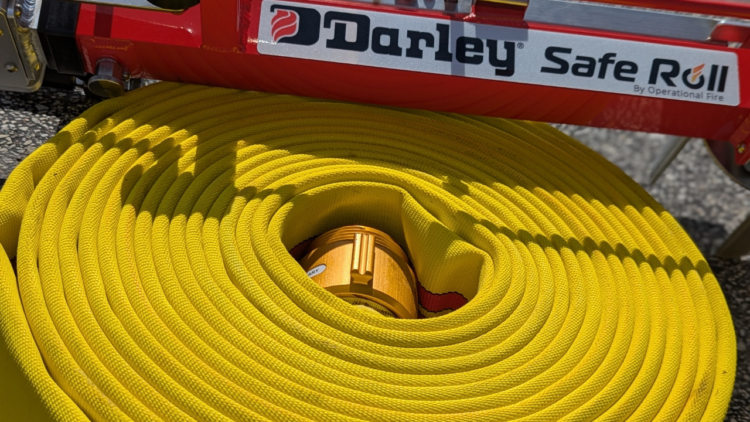
...which is exactly what we did when we walked by the Darley Safe Roll Hose Roller at FDIC 2026.
A Simple Idea with a Powerful Purpose
We were introduced to the Darley Safe Roll Hose Roller while speaking with the team from Operational Fire, two Australian firefighters who set out to solve a problem they experienced themselves.
Their primary goal wasn't to make hose rolling faster. It was to reduce firefighters' unnecessary contact with contaminated hose after an incident.
Watching them demonstrate the tool, it became clear that this wasn't just another gadget looking for a problem—it was a thoughtfully engineered solution to a job every firefighter performs.
As a company passionate about innovation that makes firefighters safer and helps departments work smarter, this is exactly the kind of product that gets us fired up! After seeing it in action, we knew we needed to share this great innovation.
Watch Matt Simmons from Operational Fire demonstrate the Safe Roll hose roller on our lines...
More Than Just a Hose Roller
At first glance, the Safe Roll is deceptively simple. It's lightweight, durable and easy to use. But once you see it work, you realize it addresses several challenges at once.
Reducing Exposure
The reason this tool exists is firefighter health.
Every opportunity to reduce unnecessary contact with contaminated equipment is another opportunity to reduce exposure to harmful products of combustion. The Safe Roll allows firefighters to control and roll hose with significantly less direct handling, complementing the decontamination practices many departments have already adopted.
At Mercedes Textiles, we've long advocated for protecting firefighters—not just during the fire, but throughout every stage of the job. It's why we've shared best practices around hose care, cleaning and decontamination over the years. The Safe Roll fits naturally into that same conversation.
Improving Ergonomics
Rolling hose by hand means repeated bending, lifting and twisting.
One roll isn't a big deal. Hundreds of incidents and training evolutions over a career are.
The Safe Roll helps reduce much of that repetitive strain while making the task feel more controlled and less physically demanding.
Maintaining Situational Awareness
One benefit we didn't fully appreciate until seeing the demonstration was how much easier it is to keep your eyes up.
Instead of focusing entirely on wrestling the hose into a tight roll, firefighters can maintain better awareness of what's happening around them while completing the task.
Protecting the Hose
This benefit is particularly interesting to us. How a hose is handled after an incident has a direct impact on its service life. Dragging charged or unrolled hose across pavement, gravel or debris during cleanup creates unnecessary abrasion.
The Safe Roll encourages a more controlled, consistent rolling process with less dragging and less handling. It's a small change that can help departments take better care of a significant investment—and that's something we're always happy to support.
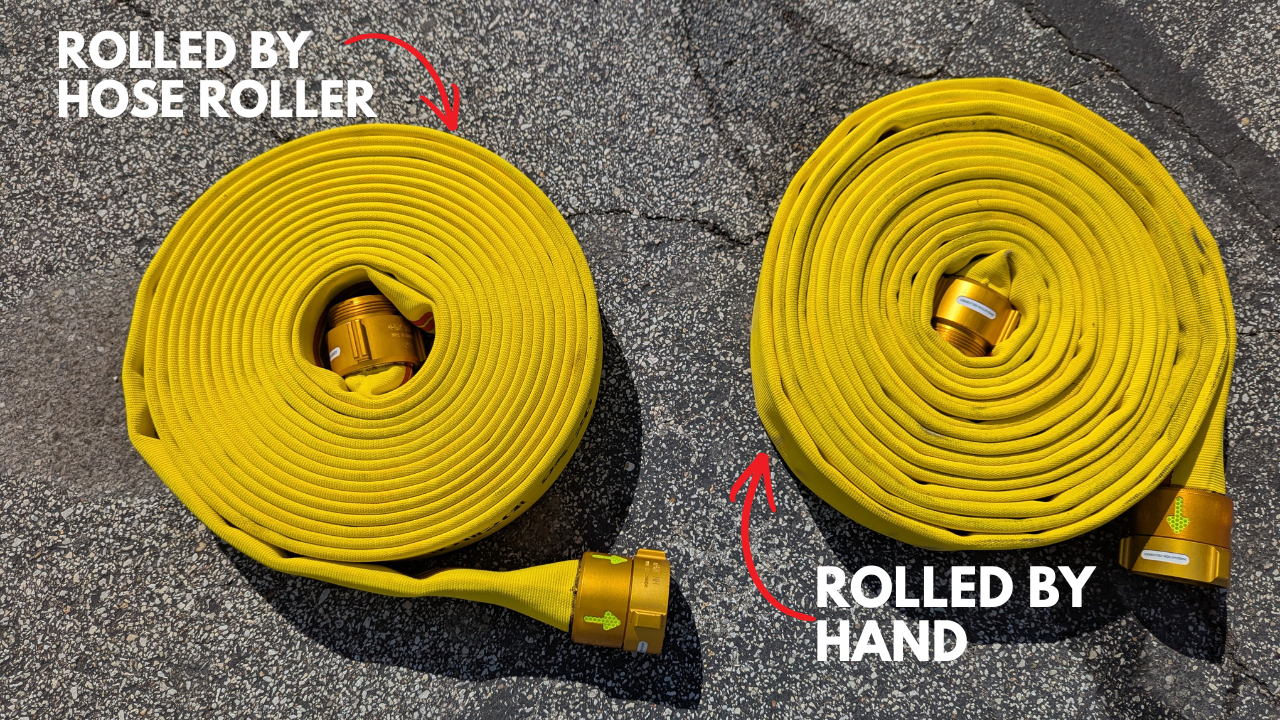
Consistent Hose Rolls
A properly rolled hose isn't just easier to store—it transports better, stacks more cleanly and is easier to handle during maintenance and inspection.
During our demonstration, we rolled identical hose lengths both by hand and with the Safe Roll. See for yourself...
Innovation That Solves Real Problems
We're not the ones who built this tool, and that's kind of the point. What gets us excited is seeing good ideas come from anywhere in this industry—other companies, other departments, other people asking the same question: why are we still doing this the hard way?
Not every advancement has to be a new fire attack strategy or breakthrough material. Sometimes it's a smarter way to do something firefighters have done the same way for generations.
The Safe Roll takes one of the most routine jobs in the fire service and makes it safer for firefighters, easier on the body and better for the equipment they'll rely on at the next call.
At Know Your Hose, we believe good ideas deserve to be shared—especially when they help protect firefighters, improve efficiency and extend the life of the equipment departments rely on every day. The Safe Roll is a great example of exactly that.
To learn more about this product, visit the Operational Fire site or Darley to purchase.
And if you're looking for more ways to maximize the life of your fire hose, be sure to check out our Fire Hose Maintenance Guide, where we cover cleaning, inspection, storage and other best practices to keep your hose performing at its best.