
written by Capt. Jordan Hempker
THIS IS PART 1 of 3 IN THE (RE)DIAL IT IN SERIES: TRIGGER 1 | TRIGGER 2 | TRIGGER 3
As fire departments establish operational standards, tactics and strategy, policies and procedures, equipment specifications—we naturally grow comfortable with the systems in place. Over time, we often forget the process that led us to those decisions in the first place.
When we forget the process, the system drifts into autopilot. Weeks turn into months. Months turn into years. Eventually, it can evolve into the dreaded phrase: “That’s how we’ve always done it.”
Organizations that recognize the need to revisit and, when necessary, revamp their systems foster a culture of growth and development. They create opportunities to improve equipment and the support systems surrounding it. More importantly, they encourage member buy-in. When firefighters feel they are part of the evaluation process—or able to contribute subject matter expertise—they invest in the outcome.
When should departments reevaluate their attack packages & pump discharge pressures?
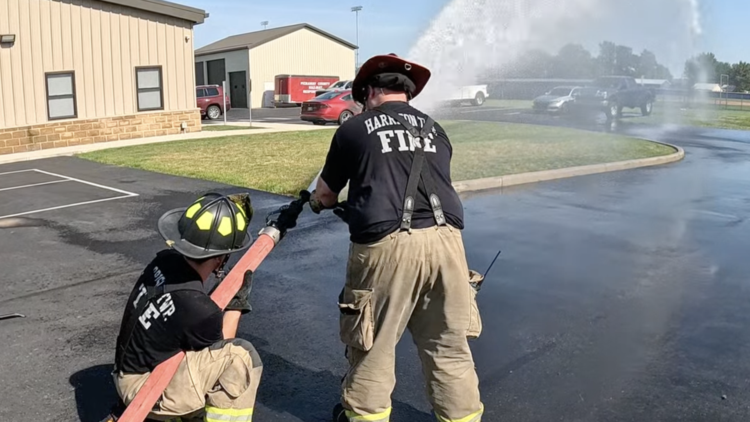
In this series, we will focus specifically on the need to reevaluate one of the most critical systems an organization builds: its hose and nozzle attack package. Too often, departments select a hose and nozzle configuration, flow it once to obtain pump discharge pressures, commit those numbers to memory, and never revisit the training for years—if ever.
Each article in this three-part series will review "trigger" scenarios that should prompt departments to test, verify, and educate their members on their hose and nozzle attack packages.
It matters to know exactly what we are doing as the engine company arriving on scene. The first line makes the difference.
Trigger #1: When you get new hose
Fire departments experience change on a daily basis. Changes occur within the run district as new construction appears or buildings are remodeled. Response models evolve. EMS protocols are updated. When these changes occur, departments communicate clearly, educate their members, and prepare the organization to operate successfully within the new system.
However, changes to hose and nozzle packages are not nearly as common.
Through travel, training, and conducting hose demonstrations, I have met many fire departments that still operate with legacy attack lines that have been in service for more than twenty years. When asked about the hose package, the common response from senior members is simple:
“It’s been on the truck since I’ve been here.”
Many of these legacy systems were designed around high-pressure hose paired with 100 psi nozzles, flowing somewhere between 125–180 GPM on a 1¾” line with a pump pressure range of 130 psi to 150 psi and 250–300 GPM on a 2½” line with a pump pressure range of 120 psi to 140 psi. These packages worked for decades. They were refined by experienced firefighters and proved themselves on countless firegrounds. Because they continued to put fires out, the system was rarely questioned or reevaluated.
Today, however, many departments are replacing equipment more frequently. Grants have become more accessible, firefighters are seeking out new training opportunities, and many departments maintain strong working relationships with vendors and manufacturers. As a result, hose replacement projects are becoming more common.
Unfortunately, the process often looks like this: the new hose arrives, it is laid out on the apparatus bay floor, and the unfortunate shift on duty is tasked with loading the entire order onto the apparatus.
Without ever testing it.
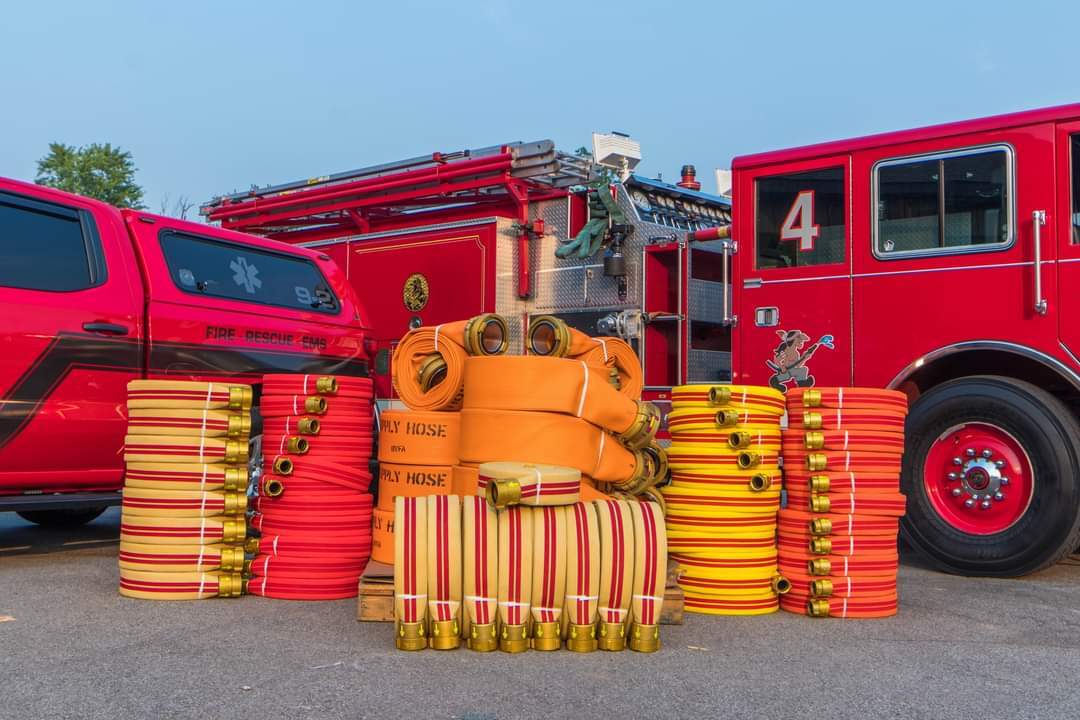
Whenever new hose is purchased, it must be tested, verified, and evaluated.
Modern hose construction has changed significantly over the years. Manufacturers now offer lighter outer jackets, different liner materials, and slight variations in internal diameter designed to support specific flow targets. Many modern hose lines are engineered to achieve higher flows with lower operating pressures.
A common mistake departments make is assuming that all fire hose is essentially the same. It is not. In fact, small differences in hose construction—particularly internal diameter—can dramatically change how an attack line performs.
Fire departments also make the mistake of mixing legacy hose with newly purchased hose without understanding the hazards that may be created. An attack line may end up consisting of several sections of hose with completely different operating characteristics. Variations in internal diameter can create turbulent water movement within the line and may increase the likelihood of kinking at different points in the stretch.
A common example is found when departments operate a 200-foot attack line by leading the first 150 feet with new hose and placing the older legacy hose at the nozzle end. That legacy hose was designed to operate with a 100 psi nozzle and higher pump pressures, and it will often perform poorly for the nozzle firefighter even though quality hose is feeding into it.
If departments must temporarily mix hose due to budget constraints, it is recommended that the older hose be placed toward the back half of the attack line with the newer hose positioned closer to the nozzle. This configuration allows the section of hose that directly influences nozzle performance to have the best operating characteristics. While not ideal, it can serve as a temporary solution until the entire hose fleet can be replaced.
Departments transitioning from traditional high-pressure hose to modern low-pressure hose must understand the differences in construction and performance. Legacy hose systems required higher pump pressures not only to operate the 100 psi nozzle but also to provide stiffness in the hose line. The higher pressure created the rigidity needed to prevent kinks and control nozzle reaction.
Low-pressure hose systems are built differently.
Today, with modern hose construction, we are seeing 1.75” attack lines providing flow rates of 150 to 185 GPM at pump pressures ranging from 90 psi to 120 psi. The 2.5” attack line is capable of providing flows ranging from 150 GPM to 324 GPM with pump pressures ranging from 70 psi to 110 psi. The difference lies in the lower nozzle operating pressure, hose construction designed to support the system, and the supplemental testing departments conduct to account for the specific plumbing of their pumping apparatus.
These hoses are designed to maintain structural integrity at lower operating pressures. When paired with 50 psi nozzles, the system can deliver higher flows with significantly reduced pump pressures. If a department simply applies its previous pump charts and operating pressures to a completely new hose package, the result can be a dangerously over-pumped line.
Over-pumping increases nozzle reaction, increases flow beyond the intended design, and reduces the efficiency and maneuverability of the engine company.
In many cases, this ultimately leads to the most dangerous condition of all: A closed nozzle.
NEW HOSE – NEW PACKAGE
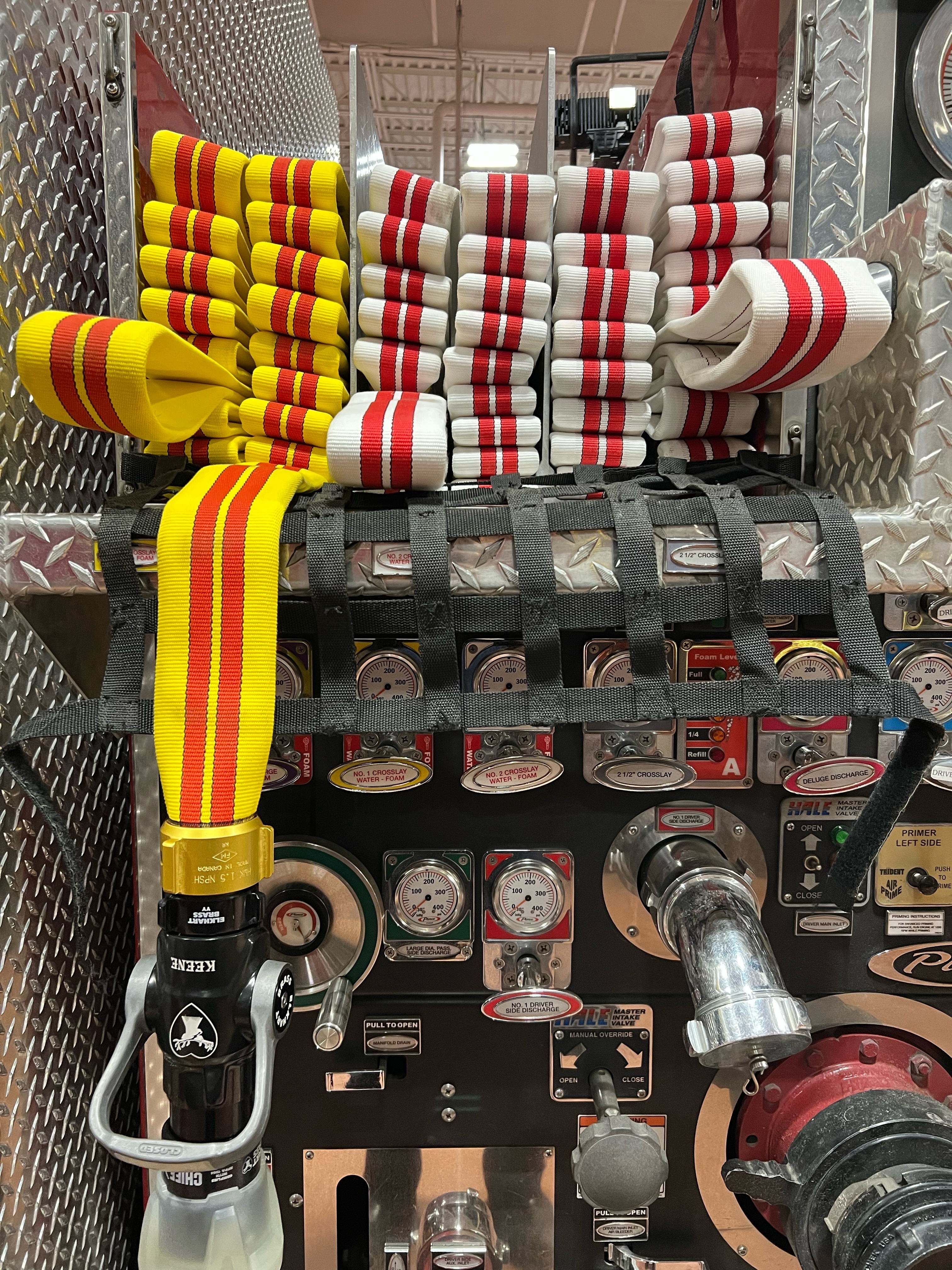
Whenever a department introduces new hose into service, the entire attack package must be evaluated from the pump to the nozzle. Inline pressure gauges, pitot gauges for smooth bore nozzles, and flow meters can help crews collect accurate data and confirm true nozzle pressures and flows.
Departments may discover that friction loss has decreased due to slight variations in fire hose internal diameters. Pump discharge pressures may be lower than expected. In many cases, the engine company may find that the apparatus can operate more efficiently, placing less strain on the pump while still delivering effective fire flows.
New fire hose should not simply replace the old system—it should trigger evaluation of the entire attack package. When approached correctly, it becomes an opportunity to refine operations and develop a system that best supports the department’s staffing, apparatus, and run district.
About the Author:
Captain Jordan Hempker is an 18-year fire service veteran with experience in rural and suburban operations. He currently serves as a shift commander with Harrison Township Fire Department in central Ohio, where he focuses on adapting engine company tactics for limited staffing and diverse incidents. His approach emphasizes tactical clarity, aggressive operations, and leadership that meets today’s fireground challenges.
Jordan began his career as a volunteer firefighter, proudly serving for 10 years while gaining valuable experience across multiple part-time departments. He later served full-time with Shawnee Township Fire Department and American Township Fire Department, both located in Lima, Ohio.
He owns and operates Western Buckeye Training, a fire service training company focused on modern, mission-driven operations. In addition, Jordan is a consultant for Mercedes Textiles, contributing to training and education on fire hose and attack packages across North America. Jordan is married to his wife, Brittany, and they share their home with three dogs. He also takes great pride in being an uncle.