
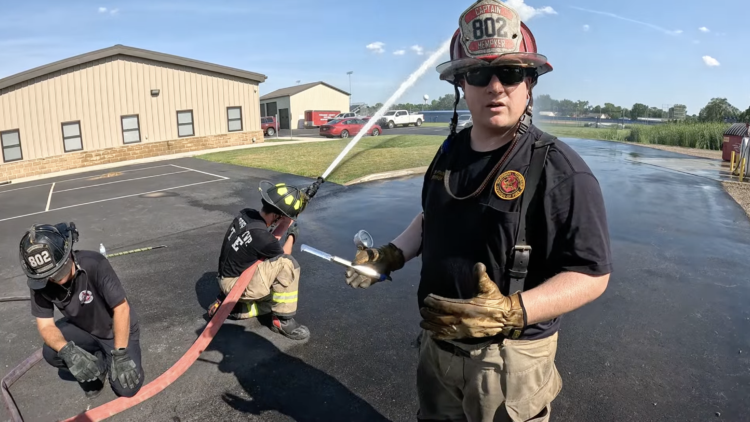
written by Capt. Jordan Hempker
THIS IS PART 1 of 3 IN THE (RE)DIAL IT IN SERIES: TRIGGER 1 | TRIGGER 2 | TRIGGER 3
In this series, we're focusing specifically on the need to reevaluate one of the most critical systems an organization builds: its hose and nozzle attack package. Too often, departments select a hose and nozzle configuration, flow it once to obtain pump discharge pressures, commit those numbers to memory, and never revisit the training for years—if ever.
In part one, we looked at the first re-evaluation trigger: when you get new hose.
Now let's dive into the next scenario... Because knowing exactly what we are doing as the engine company arriving on scene matters. The first line makes the difference.
Trigger #2: When You Get New Firefighters
When a fire department hires new firefighters, an exciting and critical process begins: building the next engine company member.
That process looks different for every organization depending on size, call volume, and staffing model. But one constant remains—the responsibility ultimately falls on the company officer to set the standard and define expectations within their engine company culture.
It is no secret in the fire service that the company officer is the most influential position in the department. I would like to share an approach that has proven successful in my role as a shift Captain (Shift Commander), one that I have passed on to my Lieutenant (Engine Officer) and has now become our shift standard for training rookies.
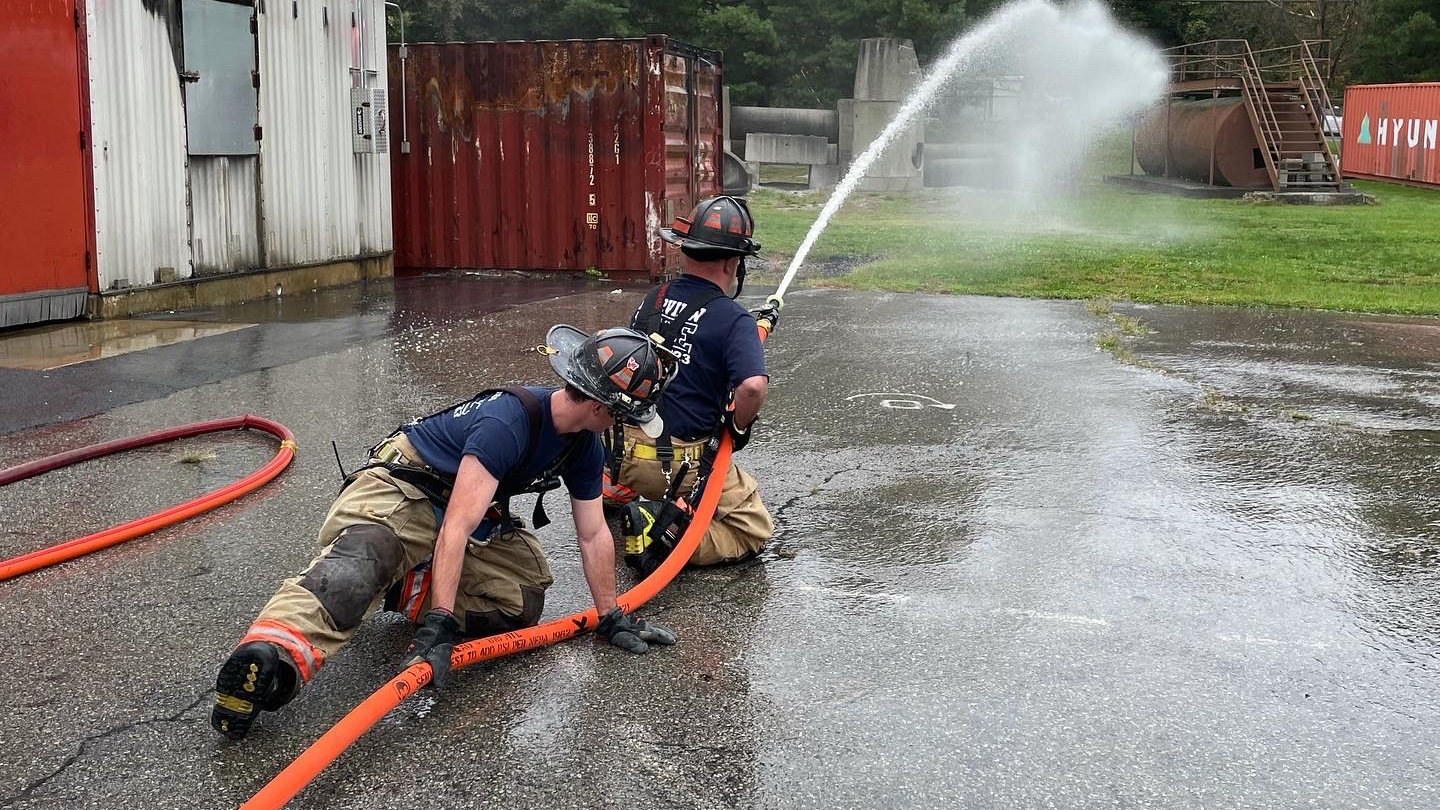
Engine Day: Crawl. Walk. Run.
One of the first dedicated training days a new shift member receives is “Engine Day.” This initial exposure to engine operations follows a crawl, walk, run model.
Crawl Phase: Discussion and Detail
We begin with deliberate discussion. As a full shift, officers lead a detailed breakdown of each attack line: hose loads, nozzle selection, target flow, pump discharge pressures, and operational expectations.
This is intentional. Having all skill and leadership levels present ensures consistency in standards. It reinforces expectations not only for the rookie but for the entire crew.
The rookie then pulls each line multiple times at a slow, controlled pace. The focus is on understanding the details of the hose load—not speed. As confidence builds, complexity increases.
As repetition improves performance, officers begin to step back. Senior firefighters and Acting Officers start taking the lead. As Captain, I listen closely, vet the information being shared, and confirm that standards are being upheld.
Having worked through the ranks, I firmly believe a Shift Commander must understand exactly what the line firefighter is experiencing on the hoseline. When assignments are given from the command post, they should be grounded in real operational understanding—not theory.
Walk Phase: Flowing Water in a “Perfect World”
Once hose deployment reaches a competent level, we shift to flowing water.
At this point, most rookies are experiencing information overload. The key is simplicity.
We stretch various lines—1¾”, 2¼”, and 2½”—into a perfectly straight layout. No kinks. No obstacles. A controlled environment.
Each line is charged and brought to the proper pressure and verified flow. Nozzle work is broken down in detail. I keep a copy of our pump chart visible so the rookie can connect what the pump operator is doing at the panel with what they are feeling at the nozzle.
This “perfect world” setup allows the rookie to see, feel, and handle a properly pumped attack line.
We are building a mental Rolodex.
They must know what a good line feels like before they can recognize a bad one.
Run Phase: Introducing Imperfection
Once that baseline is established, we introduce variables.
We add kinks. We change layouts. We create more realistic stretches. The rookie begins to feel changes in stream quality, nozzle reaction, and hose handling.
Simultaneously, the pump operator experiences gauge fluctuations, audible changes in pump performance, and opportunities to practice problem-solving.
We then intentionally over-pump and under-pump lines.
The rookie must feel the difference.
They must see the stream quality change.
They must identify inadequacy.
This is where critical thinking develops.
If a nozzle firefighter experiences a deficient attack line, they must know how to:
Chase a kink
Communicate effectively by radio
Request a pressure adjustment
Diagnose the issue under stress
If both the pump operator and nozzle firefighter can problem-solve together, they will identify deficiencies quickly and apply effective water to the fire.
Why This Matters
These trainings start slowly but evolve into full-scale drills and scenario-based evolutions. Over time, they produce efficient crews.
When officers teach and senior members reinforce the standard, the culture becomes transferable. The rookie eventually becomes the senior firefighter who trains the next new member.
And that is the point.
Bringing on new firefighters is not just about orientation—it is a trigger to reevaluate and reaffirm your hose and nozzle system. If you cannot clearly explain, demonstrate, and validate your attack package to a new firefighter, then it is time to revisit it.
Because the first line still makes the difference.
About the Author:
Captain Jordan Hempker is an 18-year fire service veteran with experience in rural and suburban operations. He currently serves as a shift commander with Harrison Township Fire Department in central Ohio, where he focuses on adapting engine company tactics for limited staffing and diverse incidents. His approach emphasizes tactical clarity, aggressive operations, and leadership that meets today’s fireground challenges.
Jordan began his career as a volunteer firefighter, proudly serving for 10 years while gaining valuable experience across multiple part-time departments. He later served full-time with Shawnee Township Fire Department and American Township Fire Department, both located in Lima, Ohio.
He owns and operates Western Buckeye Training, a fire service training company focused on modern, mission-driven operations. In addition, Jordan is a consultant for Mercedes Textiles, contributing to training and education on fire hose and attack packages across North America. Jordan is married to his wife, Brittany, and they share their home with three dogs. He also takes great pride in being an uncle.