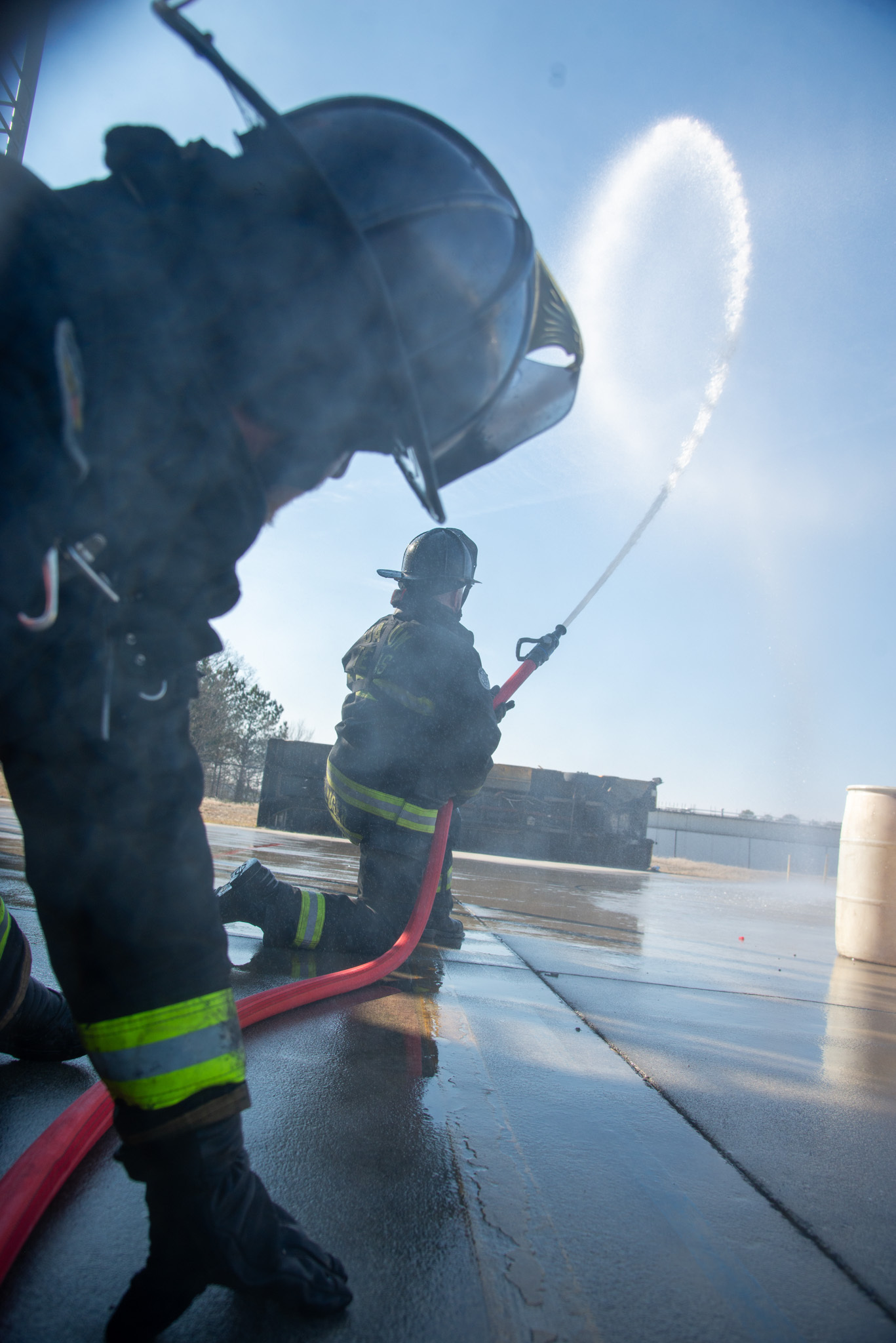
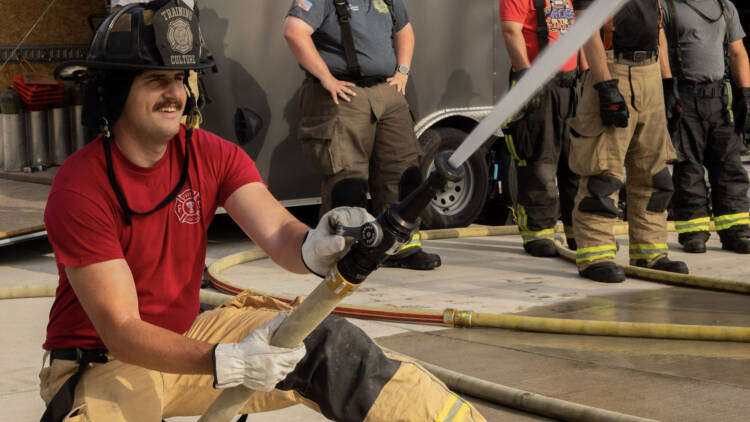
Once you've chosen an attack line and built your package, it's time to bring it all together and dial in your flow. The hose is one part of a system, working alongside the pump, appliances and nozzle to deliver the water you need. As water flows through the system, it loses some of its pressure – hello, friction loss...
Friction loss is a hydraulic reality that firefighters must account for when setting pump discharge pressures. Not doing so risks limiting flow and pressure at the nozzle.
To make it easier on you, we built an online friction loss calculator to do the engineering math for our lines. Select the hose and diameter, then input the length and volume. Et voila: You've got an estimated total pressure lost and average per 50' length.
From there, you can then determine what pump discharge pressure (PDP) you should start with to achieve your desired nozzle pressure. [ nozzle pressure + friction loss = pump discharge pressure ]
TRY THE FRICTION LOSS CALCULATOR →
CALCULATE FIRST—THEN TEST
While doing the math is necessary, we still recommend one more step: test it.
Our calculator friction loss numbers are estimates based on ideal conditions and pure math. You still need to confirm how that flow plays out in the real world.
The math is useful for planning and comparison. There are other potential variables that could affect the actual friction loss in your lines or additional friction loss in your engine plumbing. Flow testing helps confirm how your hose, pump, appliances, and nozzle are actually working together as a system. We recommend using a calibrated pitot gauge or inline flow meter to confirm the pressure at the nozzle.
While it can be done intentionally, over- or under-pumping unknowingly can lead to nozzle and hose performance issues. So calculate it, then test to confirm your hitting that desired flow.
Once you’ve dialed it in, lock in those PDPs, build out your pump charts, and train the crew to know how the hose should feel when pumped properly. Remember, your attack package isn't meant to be a set-it-and-forget-it system. Revisiting and reverifying pressures should be part of your regular maintenance and training.
WHEN SHOULD YOU RE-DIAL IN FLOWS? →
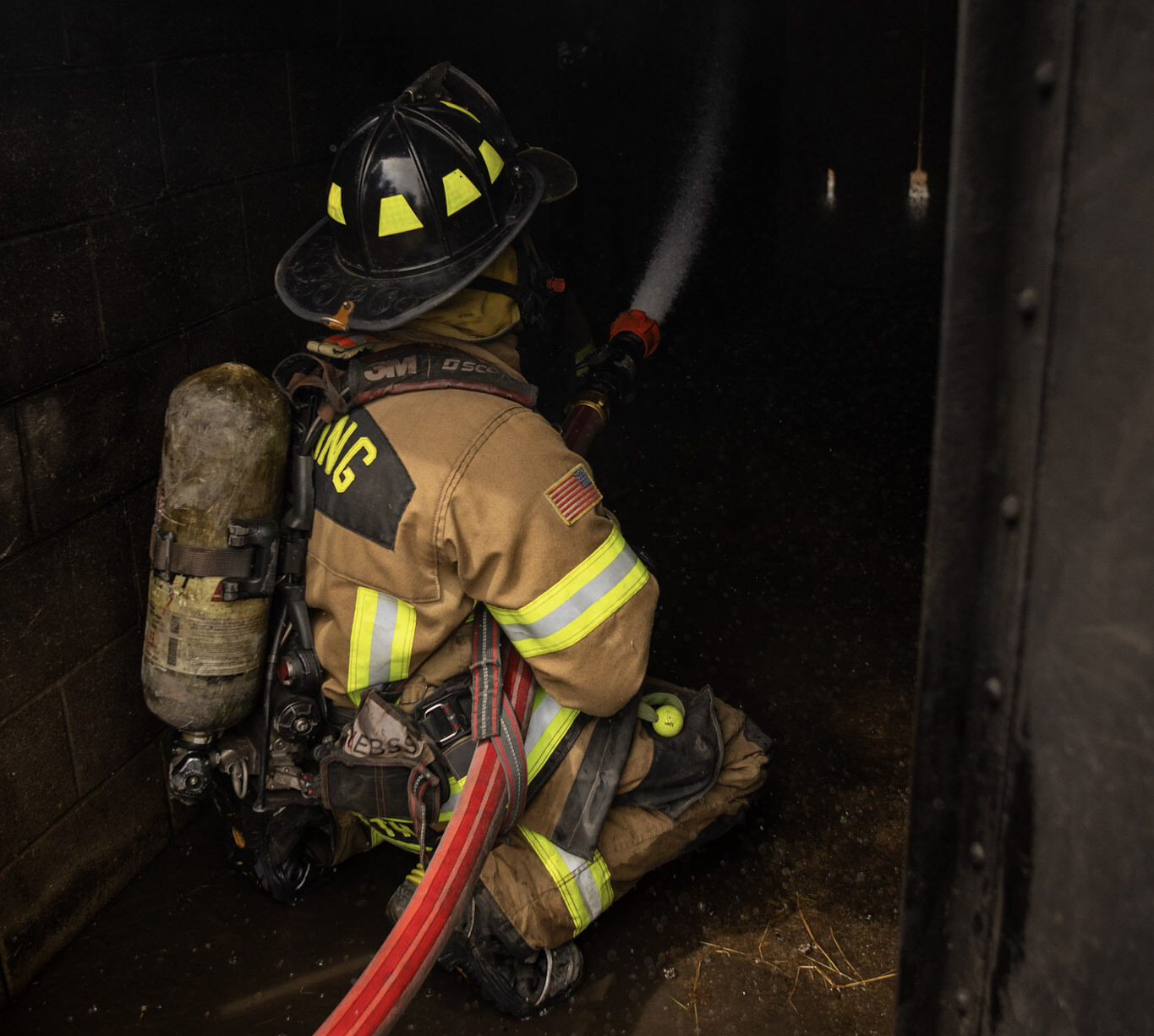
the basics of friction loss
Not sure where the numbers actually come from? Our friction loss explainer breaks down the fundamentals — the coefficient, the formula, and how diameter and flow interact.
FAQ: fire hose friction loss
- What is friction loss in fire hose?
Friction loss is the pressure lost as water moves through hose, appliances, and fittings on its way to the nozzle. It's influenced by hose diameter, length, flow rate, and the condition of the hose and appliances. - Why does friction loss matter if I already have a desired flow?
Water naturally loses pressure as it moves through a waterway. To actually achieve a desired flow at the nozzle, the pressure at the pump must account for the friction loss that happens up to the nozzle. Friction loss calculations let you estimate the required pump pressure for your package. Limiting friction loss can be particularly important for older pumpers pushing larger flows or higher pressures, as well as closed pressure systems like standpipes. Plus the higher the pump discharge pressures, the louder the fireground. - How do you calculate friction loss?
Most departments use a coefficient-based formula: FL = C × Q² × L. Mercedes Textiles' friction loss calculator applies that formula automatically, but the underlying method is documented in standard fire service hydraulics references. Learn more here. - Why test flow if you've already calculated it?
Calculations are based on standard coefficients and ideal conditions. Testing confirms how your specific hose, pump, and appliances perform together in practice — accounting for wear, elevation, and real equipment variance that the math alone can't capture.
Because you’re on the line…
Defining performance in fire hose means looking beyond the specs on paper.
It requires understanding how a hose performs as part of a system — hose, pump, appliances, and nozzle working together under the conditions your crews actually face. When that evaluation includes both the math and the test, the result is equipment that works with firefighters: delivering the flow you planned for, and the outcomes you're counting on.
At Mercedes Textiles, every hose is engineered to balance efficiency, durability, and handling to deliver that performance. Because you’re on the line, and that matters to us.
Explore hose specifications, tools, and resources at KnowYourHose.com, or connect with the Mercedes Textiles team to learn how our lines are engineered to hit the performance “sweet spot” for your department.